
‘Black Goop’ Spills into Susquehanna River from Closed Eureka Plant
 Once upon a time, Eureka Resources operated three shale wastewater recycling facilities in the Marcellus region, one in Bradford County, PA, and two in the Williamsport, PA, area (Lycoming County). One year ago, MDN brought you the news that Eureka had “temporarily” closed the Bradford site and had permanently closed the two sites in Williamsport (see Eureka Temporarily Idles Bradford County Shale Wastewater Plant). In June, MDN reached out to the company for comment on why it had not resumed operation at the Bradford site. We got no response. Now comes word that one of the closed facilities in Williamsport is leaking an “oily substance” that found its way into a storm drain and from there, into the nearby Susquehanna River. A fisherman reported it looked like a “black goop” when reeling in his line. Read More “‘Black Goop’ Spills into Susquehanna River from Closed Eureka Plant”
 We’ve been tracking a story that we consider an ongoing tragedy for more than a decade. American Water Management Services (AWMS) owns a wastewater injection well in Trumbull County, Ohio, that supposedly caused a low-level earthquake (that nobody could feel) in 2014. Actually, there are two injection wells located at the site, both operated by AWMS. They were both “temporarily” shut down by the Ohio Department of Natural Resources (ODNR) following the quake nobody could feel (see
 DT Midstream (DTM), headquartered in Detroit, owns major assets in the Marcellus/Utica region and in other regions, such as Haynesville. The company recently issued its second quarter report with some interesting updates on new pipeline projects coming. We’ll discuss those below. However, it was comments about a potential expansion of capacity along the DT-owned Millennium Pipeline (which flows Marcellus molecules) that caught our attention. The company announced an open season in May for added capacity along the Millennium (see
 We spotted an interesting court ruling in Virginia with the potential to impact midstream (pipeline) companies in the state. The case is Zinner v. Washington Gas Light Co. On July 1, the Court of Appeals of Virginia ruled that a proposed Washington Gas Light (WGL) natural gas pipeline project is a “distribution” and not a “transmission” pipeline project. In Virginia, distribution pipelines are exempt from needing to conform to local municipal ordinances, while transmission lines are subject to such ordinances.


 Last week, the Baker Hughes U.S. rig count halted its downward trend, maintaining the same overall number of rigs as the week before: 539 active rigs nationwide. The count has been down (bleeding) 14 of the last 16 weeks. Has the bleeding now stopped? We hope so. The Marcellus/Utica count remained the same for the past four weeks at a combined 36 active rigs. PA operates 18 active rigs. OH is running 11 rigs. And WV is operating 7 rigs. Twenty-four rigs targeted the Marcellus and 12 rigs targeted the Utica last week.
 The U.S. Energy Information Administration (EIA) issued its latest monthly Short-Term Energy Outlook (STEO) last week. The STEO is the agency’s monthly best guess about where energy prices and production will head in the next 12 months. We joke about the predictions coming from a dartboard, given their seemingly random ups and downs. In this latest assessment, EIA dropped its estimates for the Henry Hub spot price for 2025, again. The agency expects the HH price to average $3.60 per million British thermal units (MMBtu) in 2025, $0.10 lower than last month’s forecast. EIA also dropped its 2026 forecast, now believing the gas price will average $4.30/MMBtu, down $0.10 from last month’s $4.40 (and WAY down from the estimate two months ago of $4.90 next year).
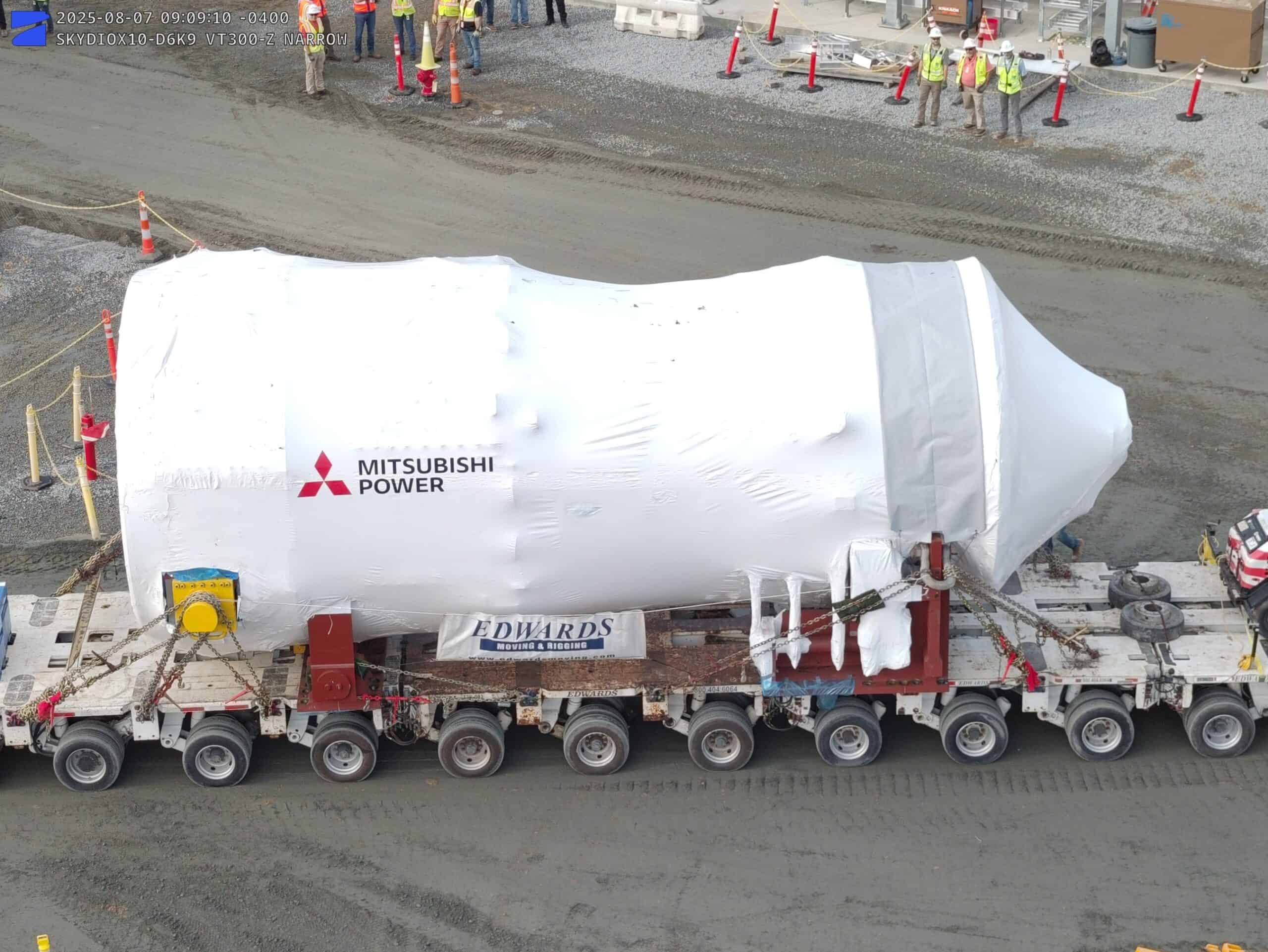
 We’ve extensively covered the Williams Northeast Supply Enhancement (NESE) Project over the years, including its death in May 2024 (see
 The nation’s largest LNG exporter, Cheniere Energy, is sounding the alarm that massive investments in and quick construction of natural gas infrastructure (namely, new pipelines) are needed to feed the LNG beast. LNG exports are due to double, to roughly 30 Bcf/d (billion cubic feet per day) by 2030—just five years away. The pipelines we have now are pretty much maxed out. We need new pipelines, and we need to start building them NOW.
 Morgantown, WV-based Hope Utilities announced yesterday that its subsidiary, Northeast Ohio Natural Gas Corporation (NEO), will build, operate, and maintain a pipeline (and associated natural gas facilities) to supply a fuel cell project being developed by American Electric Power (AEP) to power a data center in central Ohio. The details are (so far) thin. We don’t know how much the project will cost or which data center it will power. This isn’t the first such pipeline project announced to feed an AEP-powered data center.
 According to a leftist Democrat publication, Signal Ohio, what was “supposed to be a sleepy, county-level Republican meeting where political allies get on the same page” turned into a shouting match between Marietta City Council President Susan Vessels (a Republican) and State Senator Brian Chavez (a Republican and Chairman of the Senate Energy Committee). The heated discussion revolved around wastewater injection wells and their proximity to city water supplies. Chavez is the former CEO of DeepRock Disposal Solutions, which currently operates four injection wells near Marietta and has applied to build a fifth.

 We spotted a Financial Times article with an intriguing title: Opec oil ‘price war’ will halt shale boom, say US producers. The FT is the UK equivalent of our Wall Street Journal. Although it tilts a bit left, the reporting is usually pretty reliable, so we trust it (for the most part). We learned a few important things from this article. First is that the break-even price for U.S. shale drillers to make a profit is $65 per barrel. If oil remains below that point, new drilling stops. Second, one producer claimed his company would not “put any more rigs out” until prices get back to, and stabilize at, $75 per barrel.
 Eastern Gas Transmission and Storage (EGTS), a subsidiary of billionaire Warren Buffett’s Berkshire Hathaway Energy (BHE), filed a new project with the Federal Energy Regulatory Commission (FERC) last December to beef up three existing compressor stations in Centre, Clinton, and Franklin counties in Pennsylvania, and one compressor station in Loudoun County, Virginia, to flow more Marcellus molecules to the Washington, D.C. area (see