 2/2/18 Update: Have we been unfair in our characterization of Doug Lawler? Perhaps. We don’t know Doug–have never met him. He started firing masses of people at Chessy before the downturn hit. He arguably inherited a troubled company. We intensely dislike Carl Ichan and other corporate raiders, so we attributed Doug’s actions to Carl’s influence. MDN received a very nice note from a subscriber who personally knows Doug Lawler and has a different perspective to offer, which we’re happy to pass along. He said: “Jim, regarding your article on CHK, Doug Lawler probably learned a lot from Carl Icahn, but knowing Doug the way I do, I can assure you it hurt him to release people at his home office or other areas of operations. He was left with a mess and will take him years to clean it up. Hopefully with oil & gas prices stabilizing and going up, CHK will become profitable.” We thank our subscriber for sending that along!
Just like those 80s slasher movies that did so well at the box office that studios kept making more of them (Friday the 13th, Nightmare on Elm Street, Texas Chainsaw Massacre, etc.), Doug “the ax” Lawler, CEO of Chesapeake Energy, is back with part III of mass firings at the company. In October 2013 when Lawler was newly appointed as CEO (by Chesapeake’s board, which was under the influence of corporate raider Carl Ichan), he swung his ax and fired 800 people in one gory episode, promising that was the last of it (see The Great Chesapeake Massacre: Lawler Fires 800 People in One Day). It worked so well the first time, Lawler came back with a sequel two years later (see The Great Chesapeake Massacre II: Lawler Fires Another 740 People). It’s now a little over two years since the sequel, and Lawler is back for a third time, firing another round of people–400 this time, 13% of the workforce. The latest victims worked at HQ in Oklahoma City. When corporate raiders take control of a company, as Icahn did at Chesapeake, they pressure management to fire people and sell assets–in a bid to make the stock price jump higher so they can sell their shares of stock at a higher price, pocketing the profit. It’s disgusting to ruin people’s lives and pretend it’s “just business.” At any rate, Icahn is long gone from Chessy, but Lawler learned his lessons well by sitting at the feet of the master. This is rich: Lawler said because the company has sold so many of its assets, it no longer needs the people. Kind of a vicious cycle. Fire people, sell assets. Fire more people, sell more assets. Where does it end? Pretty soon Lawler will be able to cater the company’s office Christmas party with a personal pan pizza from Pizza Hut…
Read More “The Great Chesapeake Massacre III: Lawler Fires Another 400 People”

 On Monday, Dominion Energy CEO Tom Farrell reported that the company’s Lusby, Maryland Cove Point LNG export facility will become operational and begin to export LNG in “early March” (see Dominion CEO Says Cove Point LNG Operational in “Early March”). Then yesterday, Dominion issued a press release to say Cove Point has now (as of this week) begun producing LNG! What gives? This “we’re now producing LNG” is part of the commissioning process which began back in December (see Dominion Cove Point LNG Export – Dress Rehearsal Begins). Feed gas is imported and used for testing purposes, and is the final step before the plant goes online into full production. The feed gas came from Shell (sourced from Nigeria), and Shell will take delivery of the LNG that results. When the initial commissioning is done, Marcellus/Utica gas will then begin flowing to the plant and the LNG produced will begin shipping (by “early March”) to Japan and India…
 In December 2015 Marcellus/Utica driller Magnum Hunter Resources filed for bankruptcy (see
  Since 2012, Pennsylvania has collected the equivalent of a severance tax from Marcellus Shale drillers via something called an impact fee. Same concept as a severance tax. You drill a well, gas comes out, you pay a tax. Except with an impact fee you pay whether or not anything comes out of the ground (a more reliable source of tax revenue than a severance tax). The impact fee quickly started to generate hundreds of millions of dollars a year in extra revenue for Pennsylvania–60% of which goes back to the communities where drilling happens (which Philadelphia politicians hate), and 40% of which goes to the black hole of Harrisburg for redistribution (which Philadelphia politicians love). Drilling began to slow in 2014, and crashed in 2015/2016, with low low commodity prices for natgas. As the price went down, so too did the number of new wells drilled. Impact fee revenue (which is delayed a year) also went down. The impact fee doled out this year is based on revenues raised in 2017. The PA Independent Fiscal Office (IFO) does a pretty good job of guesstimating how much impact fee revenue will be generated. Last July, the IFO predicted impact fee revenue from 2017 would end up being around $222 million in revenue (see
  On Tuesday, Pennsylvania State Senate Resolution 104 passed in the Senate Environmental Resources and Energy Committee (party line vote, Republicans voted for, Democrats against). SR 104, introduced by Sen. Camera Bartolotta, urges PA Gov. Tom Wolf to get off his rear-end and reauthorize drilling in PA state forest land. The bill stands a good chance of being passed by the full Senate, which has the radicals at PennFuture up in arms. They issued a press release (i.e. marching orders to slavish Democrat Senators) to oppose the resolution. Frankly, they don’t have anything to worry about. As we pointed out yesterday with respect to the Senate’s so-called bipartisan resolution to study the sloooooow way DEP issues permits, resolutions aren’t worth the paper they’re written on (see
  Earlier this week MDN told you about a new bill that passed the Ohio legislature and now awaits Gov. John Kasich’s signature called House Bill 225, which triples the amount of money set aside to cap orphan wells in the Buckeye State (see
  On Tuesday, the Ohio State Supreme Court rejected a case in which landowners who were made part of a “unitization order” (i.e. forced pooling) had objected claiming their property rights were stripped away without due process. In legal terms, the landowners claimed it was a “taking” of their property without just compensation. The Supreme Court rejected the case because, they said, there were other legal means the landowners could have tried first (a lower court) before appealing the case direct to the Supremes using something called a mandamus action. In essence, the Supremes said, “Nice try, but you need to jump through the proper hoops first.” Ultimately the Supremes did not rule on the Constitutionality of the claim itself because the case had gotten to them via the wrong path. We’re guessing the landowners will now go back to square one and use the path laid out by the Supremes. Here’s the low down on the rejection by the Supremes, from the legal beagles at the Vorys law firm…
 The “best of the rest”–stories that caught MDN’s eye over the break that you may be interested in reading. In today’s lineup: Big Green groups want “more time” to “review” Shell ethane pipeline plans; natgas industry helps rescue Nicholson from ice jam; Enterprise building ethylene export terminal on Gulf Coast; ND Bakken shale oil field “stronger than ever”; Exxon tripling its bet on the Permian; new study in “Nature” magazine pokes another gaping hole in climate change theory; drilling costs rise as rig counts climb; Trump’s State of the Union for energy; and more!
 On Monday Gulfport Energy (drills mainly in the Utica but also in Oklahoma and Louisiana) issued it’s fourth quarter and full year 2017 results, along with a preview of what they expect to do in 2018. Gulfport has drilled the second highest number of Utica wells in Ohio, second only to Chesapeake Energy. Gulfport’s production in 4Q17 averaged 1.26 billion cubic feet per day equivalent, up 5% from 3Q17 and up a whopping 61% from 4Q16. Gulfport brought 15 Utica wells online in 4Q17. What’s ahead in 2018? The company will spend $770-$835 million in 2018. Astonishingly, Gulfport will not borrow to spend that kind of cash! Their spending will be 100% funded by the cash flow they generate from selling gas and oil and NGLs. Gulfport figures production will average somewhere around 15-19% more in 2018 than in 2017. Using an “average of 2.5 rigs” (how does that work?), Gulfport will drill 36-40 new Utica wells this year with an average lateral length of 11,200 feet. Gulfport plans to bring online 33-37 Utica wells with an average lateral length of 8,000 feet. Here’s the update of what happened in 2017, and what to expect in 2018, for one of the most important players in the Ohio Utica…
 Our lead story today is about Gulfport Energy which highlights some exciting news: This year (in 2018) Gulfport will fund their entire drilling budget out of the cash flow the company generates from selling gas/oil/NGLs (see Gulfport Energy Continues Focus on Utica for 2018, No Borrowing). Thing is, Gulfport isn’t the only Marcellus/Utica driller to advertise the fact that this year they are “living within their means” and not borrowing. Others include Range Resources, EQT and Antero Resources. Wow! We’re finally profitable!! Or are we? MDN spotted some analysis by a hedge fund manager. Writing on the Seeking Alpha investor’s website, Josh Young says (in our words) “hold on a minute” with respect to M-U drillers appearing to be able to grow production without borrowing. Why is Josh not convinced with this good news? Because when you dig deeper into the numbers, you find that “organic growth within cash flow is further from reach” because drillers are using DUCs to spend less on drilling, and grow production, than they otherwise would be. A DUC is a Drilled but UnCompleted well. Many times drillers will drill the initial hole in the ground, but then not “complete” (or frack) the well. Why do that? For a variety of reasons. The biggest reason is usually because the commodity price of gas (or oil, depending on the well) is not favorable. Rather than lose the lease (an expensive proposition), drillers will begin the process by drilling, and then leaving, the well, returning later to complete it when prices go up again. Josh’s thesis is that by using DUC inventory drillers aren’t really funding the entire budget from current year cash flow, because some of the money was spent in a previous year to drill the well. They are, in essence, still borrowing–from a different year. Josh estimates an average of 20% of the “new” wells coming online are DUCs and not truly new wells funded by current year dollars–meaning these companies aren’t as “profitable” as they may seem. Does he have a point? Is it all just financial mumbo jumbo? You decide…
 In a strongly worded letter dated Sunday, Rover Pipeline tells the Federal Energy Regulatory Commission (FERC) they are “frustrated by the inaccurate central premise underlying the letter received from” FERC shutting down drilling at the Tuscarawas River location. On Jan. 24 FERC sent a letter to Rover stopping drilling at Tuscarawas, which had only restarted in December (see
  In December 2016 MDN brought you news about Kinder Morgan’s “Broad Run Expansion Project” that will expand transportation capacity of natural gas on the existing Tennessee Gas Pipeline (TGP) system. Antis tried to stop the project, but the Federal Energy Regulatory Commission rejected their pleas (see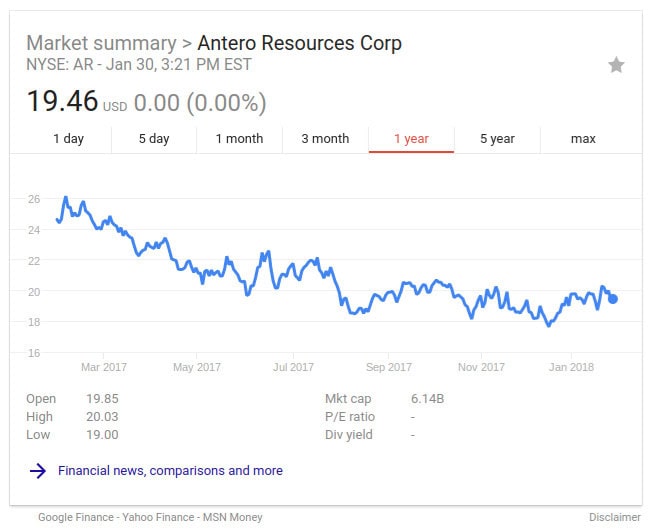
 Dominion Energy, a huge company with fingers in many pies (gas and electric utility, electric generator, nuke plant owner, pipeline company, LNG exporter) issued its fourth quarter and full year 2017 update on Monday. Dominion’s top brass also held an earnings call with analysts. We reported yesterday that on the earnings call, Dominion CEO Tom Farrell said the Cove Point LNG export plant on the shore of Maryland will begin shipping LNG “in early March” (see
  You have to understand something about politicians–a lesson we learned long ago when working in Washington, D.C. If a politician floats a plan to “study” something, that really means “we’re not going to do a single thing about it.” Over the past couple of years the Pennsylvania Dept. of Environmental Protection (DEP) has gotten slower and slower in issuing permits for shale drilling–for simple things, like erosion permits a driller needs to push dirt around to create a well pad. The DEP has a policy of issuing erosion and sedimentation permits 14 days from the date of application. These types of permits are common and necessary when building roads, well pads, etc. As of last summer it was taking the DEP 250 days to issue those permits (see
  Last week the Delaware River Basin Commission (DRBC) held two public hearings in Philadelphia about its proposed plan to ban fracking in the Delaware River Basin (see