• | |

    Guest Post: The Real Record of Ex-EPA Sec. Gina McCarthy

    Depending on whether you’re a hardened leftist, or a common sense conservative, Gina McCarthy (former head of the Environmental Protection Agency) was either Savior or Satan. We tend toward the latter–someone who (ab)used her office to push a far-left political agenda. During her tenure, McCarthy oversaw the ramrodding through of the horrible Waters of the United States (WOTUS) and Clean Power Plan (CPP) regulations. It’s taken Team Trump a while, but both measures are being taken apart, plank by plank. Most people from agencies like the EPA retire quietly after their tenure. Not McCarthy. She’s out there in the media attempting to whitewash and cover up her mistakes, and castigating her successor, Scott Pruitt. Mainstream media, which tilts left of Attila the Hun, loves it (and her), giving her a voice. MDN friend Steven Heins, an energy and regulatory consultant and former vice president of communication for Orion Energy Systems, sets the record straight about Ms. McCarthy’s tenure as head of the EPA. Steve reminds us all of some rather uncomfortable truths about the EPA as it was under McCarthy…
    Read More “Guest Post: The Real Record of Ex-EPA Sec. Gina McCarthy”

  • Marcellus & Utica Shale Story Links: Wed, Oct 11, 2017

    The “best of the rest” – stories that caught MDN’s eye that you may be interested in reading. In today’s lineup: FERC extends NY Millennium Valley Lateral Pipeline deadline; WV natgas production up slightly in 2016; conference on petchem impact on Ohio River coming in Nov; Florida Republicans float frack ban bill; EPA moves to dismantle Obama Clean Power Plan; will Trump nuke the energy markets; American-made energy grows, completed wells up 63% this year; global warmers don’t walk the walk; why renewables aren’t lowering Germany’s carbon emissions; and more!
    Read More “Marcellus & Utica Shale Story Links: Wed, Oct 11, 2017”

  • | | | | | |

    Sunoco Makes Marcellus Ethane-by-Truck Available at Marcus Hook, PA

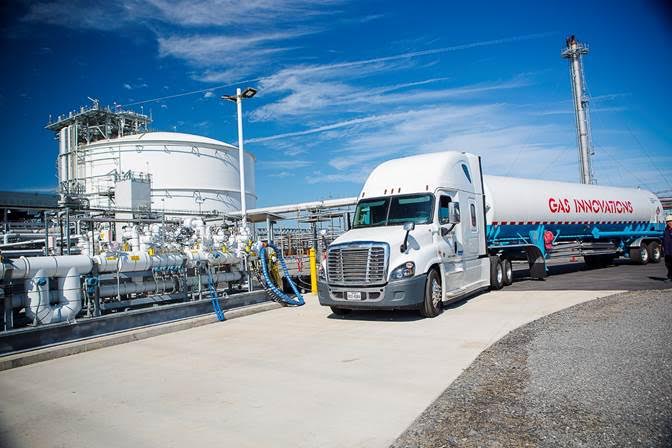
    The first truck enters the loading pad for the new ethane distribution rack at Sunoco Partners Marketing and Terminals’ Marcus Hook Industrial Complex in Marcus Hook, Pa., on Sept. 21. The facility’s 300,000 barrel chilled ethane tank is in the background. (Photo Credit: Energy Transfer Partners, L.P.)

    In March 2016 an Ineos tanker ship carrying 173,000 barrels of Marcellus ethane set sail from the Marcus Hook terminal near Philadelphia, bound for Norway (see Bon Voyage! First Ethane Export Ship Leaves Marcus Hook in Philly). Since that time, regular shipments of Marcellus ethane have traveled from Marcus Hook to various European destinations. Yesterday Sunoco Partners, a subsidiary of Energy Transfer Partners and the operator of the Marcus Hook refinery, announced they have opened a new ethane distribution facility inside the Marcus Hook refinery complex. It is a truck loading facility–the first such facility in the U.S. to load liquid ethane onto tanker trucks for local delivery. Wait, what? You thought ethane was only used in gigantic cracker plants, used as the raw material to make ethylene (i.e. plastics)? That is the primary use of ethane–but not the only use. Ethane can also be used as a refrigerant in cryogenic refrigeration systems. And there are other uses for small quantities of ethane, including the manufacturing of electronics. Sunoco says local trucked ethane deliveries will be used for “various ethane uses, from energy research and development to cooling and other industrial applications.” Sunoco already has its first customer–Gas Innovations–a reseller that trucks NGLs like ethane and propane throughout the U.S. (and ships it around the world). Gas Innovations is excited that their “cryogenic ethane business” is now supplied domestically via Marcus Hook. Previously, Gas Innovations had to import liquefied ethane. Marcus Hook’s truck facility opens up a whole new market for smaller users of Marcellus/Utica ethane throughout the U.S….
    Read More “Sunoco Makes Marcellus Ethane-by-Truck Available at Marcus Hook, PA”

  • | | | | | |

    Transco’s New York Bay Expansion Goes Live, Flows More Gas to NYC

    Williams announced yesterday that its New York Bay Expansion pipeline project to flow an extra 115 million cubic feet per day (MMcf/d) of natural gas to New York City is now online and working. In July 2015, Williams filed an application with the Federal Energy Regulatory Commission (FERC) for the $130 million project, which will flow Marcellus gas to 500,000 additional New York City residents by the 2017/2018 heating season (see Williams Announces New Upgrades to Transco Pipeline into NYC). In July 2016, FERC approved the project and construction began (see FERC Approves Transco Expansion Projects in NYC & Virginia). The project expanded capacity on the Transco pipeline by installing new compressor station equipment, replacing a quarter mile of pipeline (in New Jersey), and upgrading meter and regulator stations at several locations in NJ, PA and NY. All the work was done in existing rights-of-way and at existing facilities, with no new building or greenfield construction necessary. That didn’t stop the crazies from protesting, which they did. The good news is that the project is now completed and more yummy, fracked Marcellus gas is now flowing to customers in Brooklyn, Queens, Staten Island and Long Island…
    Read More “Transco’s New York Bay Expansion Goes Live, Flows More Gas to NYC”

  • | | | | | |

    NC DEQ Rejects Plan for Atlantic Coast Pipeline – What’s Next?

    North Carolina has become the first state to complete an environmental evaluation for Dominion’s proposed $5 billion, 594-mile Atlantic Coast Pipeline (ACP)–a natural gas pipeline that will stretch from West Virginia through Virginia and into North Carolina. ACP is slated to run through eight NC counties. After completing it’s evaluation, the NC Dept. of Environmental Quality (DEQ) issued a rejection letter (copy below) for the project. The reason? The DEQ says the erosion and sediment control plan for the project is not up to scratch. Dominion can now do two things: Revise the erosion and sediment control plan and resubmit it, or contest the DEQ’s rejection of the existing plan. Although antis are rejoicing at the news, there really isn’t much here in the way of news. This is not uncommon in pipeline reviews. A government agency (federal or state) will push back on some aspect of the plan, the project builder will modify the plan, and the modified plan will pass muster and life goes on. That’s the way it works. The DEQ is (presumably) doing it’s job and not simply looking for an excuse to reject the project. We’ll give them the benefit of the doubt–this time. Although we’ve not read that Dominion has responded to the rejection, another partner in the project, Duke Energy, has responded–saying they will provide the necessary information the DEQ says is missing in the original plan…
    Read More “NC DEQ Rejects Plan for Atlantic Coast Pipeline – What’s Next?”

  • | | | | | | |

    Small Group of Radicals Blocks Atlantic Sunrise Site in Lancaster County

    Environmental radicals from a group called Lancaster Against Pipelines made good on their promise to disrupt work on Williams’ Atlantic Sunrise Pipeline project–a $3 billion, 198-mile natural gas pipeline project running through 10 Pennsylvania counties to connect Marcellus Shale natural gas from northeastern PA with the Williams’ Transco pipeline in southern Lancaster County. Lancaster Against Pipelines is headed up by Mark Clatterbuck (who participated in the protests against the Dakota Access Pipeline) and his wife Malinda. The clattering Clatterbucks got 20-35 wackos from Lancaster County to load themselves into 16-18 vehicles (numbers change depending on the news source), which they then drove onto an access road used by Williams, where workers are beginning to clear land. The wackos parked themselves right in the middle of the road and stood in front of machinery, preventing Williams personnel from accessing the site. The only problem, for the wackos, is that it was raining so hard (leftovers from Hurricane Nate moving through), that Williams personnel weren’t working at the site anyway! However, it’s the principle of the thing. So the police were called. The so-called protesters were asked to move (or be arrested)–so they moved. End of story. Nobody hauled away in handcuffs, no striking images of people laying down refusing to move (too wet for that). Just a bunch of wackos with nothing better to do for a few hours, along with a few reporters…
    Read More “Small Group of Radicals Blocks Atlantic Sunrise Site in Lancaster County”

  • American Energy Partners Invests in “Tier I” Marcellus Assets

    This story is a tangled web we’re having trouble unraveling. We’re hoping some astute MDN readers can shed some light for us. A few days ago we noticed a press release from American Energy Partners, Inc., with a subsidiary company called Gilbert Oil & Gas, claiming to have invested in some “Tier I” Marcellus and Utica Shale gas and oil wells, as well as undeveloped acreage in the region. Wait right there. Isn’t American Energy Partners (AEP) the company founded by Aubrey McClendon after he was tossed out of Chesapeake Energy? AEP announced last year, following the death of McClendon, they were closing the doors (see McClendon’s American Energy Partners Shutting Down This Summer). Did someone buy the name or the remains of the company and reopen it? We started teasing on those threads and here’s what we’ve been able to find…
    Read More “American Energy Partners Invests in “Tier I” Marcellus Assets”

  • | | | | |

    OH Supreme Court Blocks Youngstown Frack Ban Ballot Measure

    In July MDN told you that puppets of the PA-based Community Environmental Legal Defense Fund (CELDF) have once again gotten enough signatures to put a so-called Community Bill of Rights (i.e. frack ban) ballot measure on the ballot this November in Youngstown, Ohio for a 7th time (see Youngstown Frack Ban Vote on November Ballot – for 7th Time). The same people have tried six times before–and the ballot measure failed every single time. However, as we pointed out, this time is different. In addition to the usual no fracking, no pipelines pablum, this 7th petition has language that makes it legal to break the law. If the ballot measure were to pass, and if an anti got it into her head to sit in front of a bulldozer that was about to clear ground for a wellpad, or dig a trench for a pipeline, the police would not be able to arrest and remove the anti. It would be within her rights to sit there and block legal, legitimate activity–all in the name of saving the planet. It would, in essence, legalize mob rule. In September the Mahoning County Board of Elections voted to NOT allow measure on the ballot in November (see Mahoning County Bans Frack Ban Measure from Nov Ballot in Youngstown). Using the deep pockets of the CELDF, antis appealed the rejection to the Ohio Supreme Court. It didn’t take the Supremes long. They ruled last Friday to uphold the Mahoning County Board of Elections decision to not allow the measure on the November ballot. However, it was a close vote, 4-3, and likely means more litigation will follow in the future…
    Read More “OH Supreme Court Blocks Youngstown Frack Ban Ballot Measure”

  • | | | |

    Another Look at WV’s Co-tenancy & Joint Development Proposals

    When MDN editor Jim Willis attended the Shale Insight conference in Pittsburgh two weeks ago, one of the recurring themes he heard from West Virginia officials is that the state urgently needs to pass “mineral efficiency” laws. What they meant by mineral efficiency is another name for co-tenancy and joint development. We’ve written a fair bit about the topic–what we call “forced pooling lite.” In August the West Virginia Oil & Natural Gas Association (WVONGA) announced its intention to push, once again, for co-tenancy and joint development (see WVONGA Makes Plans to Push Forced Pooling Lite in 2018). We spotted an editorial from the co-founder of the West Virginia Surface Owners Rights Organization on the topic co-tenancy and joint development. He has a unique perspective. He calls co-tenancy “majority rules” and joint development “invisible ink.” What does he mean? And what would these two measures do if adopted? And is there really an urgent need for them? Let’s tackle this issue once again…
    Read More “Another Look at WV’s Co-tenancy & Joint Development Proposals”

  • | | | |

    Is Marcellus/Utica Gas Getting Exported from Cheniere’s Sabine Pass?

    One of the reasons we periodically report, and keep a close eye on, Cheniere Energy’s Sabine Pass LNG export facility in southern Louisiana is our suspicion that at least some Marcellus/Utica gas makes its way to that facility and gets exported to other countries. We’ve never been able to prove our suspicion, but we got a lot closer to proving last February when Williams confirmed that the mighty Transco Pipeline now has a direct connection to Sabine Pass (see Williams Confirms Transco Now Ships Gas Directly to Cheniere LNG). Our friends at RBN Energy have done a deep dive into this topic. Using flow data and their own knowledge of pipelines and reports about new projects coming online, RBN has determined that “there are early indications that recent pipeline takeaway and reversal projects from the producing region and the resulting connectivity are indirectly bridging the divide.” Meaning that by using indirect routes (gas passed from one pipeline to another to another), indeed some of our gas is making its way to the Sabine Pass export facility…
    Read More “Is Marcellus/Utica Gas Getting Exported from Cheniere’s Sabine Pass?”

  • | |

    Important Marcellus/Utica Primer Available to Download – for FREE

    MDN editor Jim Willis has once again partnered with NGI (Natural Gas Intelligence) to bring you a great (and FREE) opportunity to learn more about everyone’s favorite twin shale plays: The Marcellus and Utica Shales. NGI produces a mountain of data and information as part of their research and development efforts, publishing it in a Shale Plays Factbook, which costs $179. However, because of MDN’s special partnership with NGI, they have agreed to combine the Marcellus/Utica sections from the Factbook into a special primer, available free for MDN readers only. Here’s what’s in the Marcellus/Utica Shale Primer, a few sample pages, and how you can get a copy instantly…
    Read More “Important Marcellus/Utica Primer Available to Download – for FREE”

  • Marcellus & Utica Shale Story Links: Tue, Oct 10, 2017

    The “best of the rest” – stories that caught MDN’s eye that you may be interested in reading. In today’s lineup: Pipeline hit in Pike County, PA, forces evacuation; US shale casts a long shadow over petchem; energy markets face basis volatility; 6 weeks left until winter natgas season kicks in; the innovation that will drive the next oil supercycle; why energy-rich Australia pays out the nose for power; onshore fracking begins in UK “within weeks”; and more!
    Read More “Marcellus & Utica Shale Story Links: Tue, Oct 10, 2017”

  • | | | | |

    Ohio Approves 2 Utica-Fired Power Plants in Guernsey, Trumbull Counties

    Last week the Ohio Power Siting Board (OPSB) approved two new Utica-gas powered electric plants, and authorized the expansion of a third plant to a bigger size. The OPSB approved the Guernsey Power Station–a new Utica/Marcellus natural gas-fired electric generating plant proposed for (surprise!) Guernsey County, OH (see New Utica-Powered Electric Plant Proposed for Guernsey County, OH). OPSB also approved the Trumbull Energy Center project, a new plant proposed by Clean Energy Future for (surprise!) Trumbull County (see Details on Newly Announced Trumbull Energy Center Electric Plant). That second one may or may not sound familiar. Clean Energy is already building an electric generating plant in Trumbull County–in Lordstown, called the Lordstown Energy Center (see Lordstown Energy Center Breaks Ground on $890M Electric Plant). Clean Energy proposed building a second plant right next to the first one (see Details on Newly Announced Trumbull Energy Center Electric Plant). We suppose Clean Energy could have called the second plant Lordstown Energy Center II, but instead they elected to call it Trumbull Energy Center. Two plants, side by side, built by the same company–now approved by OPSB. The OPSB also approved a request by Clean Energy to expand the already-under-construction Lordstown plant, from 800 megawatts to 940 megawatts. Here’s the lowdown on what got approved, and where it’s all located…
    Read More “Ohio Approves 2 Utica-Fired Power Plants in Guernsey, Trumbull Counties”

  • | | | | | |

    Rover Pipe Nearly Doubles Flow with Addition of Carroll, OH Compressor

    Fire it up! On Friday, the Federal Energy Regulatory Commission (FERC) granted Energy Transfer permission to fire up the three units that make up the Carroll County Compressor Station (called Compressor Station 1) that helps compress and flow natural gas through the mighty Rover Pipeline. According to the letter from FERC authorizing the startup of the compressor station, FERC is authorizing “partial” service to commence. Since ET wanted to start the station on Friday, we expect the plant is by now up and running. The effect will be dramatic. According to stats released by NGI (Natural Gas Intelligence), which has an excellent Rover Tracker application on their website (see Friday’s version here), Rover has been flowing around 680 million cubic feet per day (MMcf/d) of Utica/Marcellus gas. With the addition of the Carroll County compressor station, that number will nearly double–to 1.2 billion cubic feet per day (Bcf/d). Cool! Here’s the details of how Rover’s capacity just nearly doubled with the addition of a single compressor station…
    Read More “Rover Pipe Nearly Doubles Flow with Addition of Carroll, OH Compressor”

  • | | | | |

    Antis Redux Court Strategy on Orange County, NY Gas Power Plant

    Antis certainly learn from one another. If an anti-fossil fuel tactic works (in court) in one place, antis in other locations jump on it like white on rice. Ninny nanny antis in the Chenango Valley School District (suburb of Binghamton, NY) got their knickers in a twist when NG Advantage proposed building a “virtual pipeline” project about a mile from one of their schools. A virtual pipe is a compressor station that compresses gas from a pipeline (the Millennium in this case) and loads it onto specially fitted tanker trucks to haul the gas to industrial users. The school paid $40,000+ for an outside-the-area law firm, which sued and in a county-level court (called “Supreme Court” in quirky NY). The Big Money law firm won the case, convincing the judge to proclaim that the local planning board didn’t do a good enough job in considering NG’s application (see Judge Rules Against Broome Virtual Pipe, NG Advantage to Try Again). Hey, it worked in Broome County, NY, so the ninny nanny antis in Orange County, NY (close to New York City) thought they would give it a try. Competitive Power Ventures is in the midst of building a $900 million natural gas-fired electric generating plant in Wawayanda, Orange County. Early on local antis sued to stop the project, but a local judge threw out the case in 2015, clearing the way for construction (see Orange County, NY Marcellus-Fired Electric Plant OK’d by Judge). Antis next tried to deny a source of fuel for the plant. They were successful in pressuring New York’s corrupt governor, Andrew Cuomo, to instruct his corrupt Dept. of Environmental Conservation, to deny a permit for a 7.8 mile pipeline to feed the plant. Eventually, in an unprecedented (and embarrassing for NY) action, the Federal Energy Regulatory Commission overruled the DEC to allow the pipeline to be built. So that avenue to stop the CPV electric plant bombed out for the antis. Back to square one. Antis are now suing the local planning board in Wawayanda, claiming they didn’t do a good enough job in reviewing the original application. Sound familiar? A court date is set for tomorrow in the case…
    Read More “Antis Redux Court Strategy on Orange County, NY Gas Power Plant”

  • | | | | | | |

    Shell Files PA Application for Ethane Pipe to Feed Cracker Plant

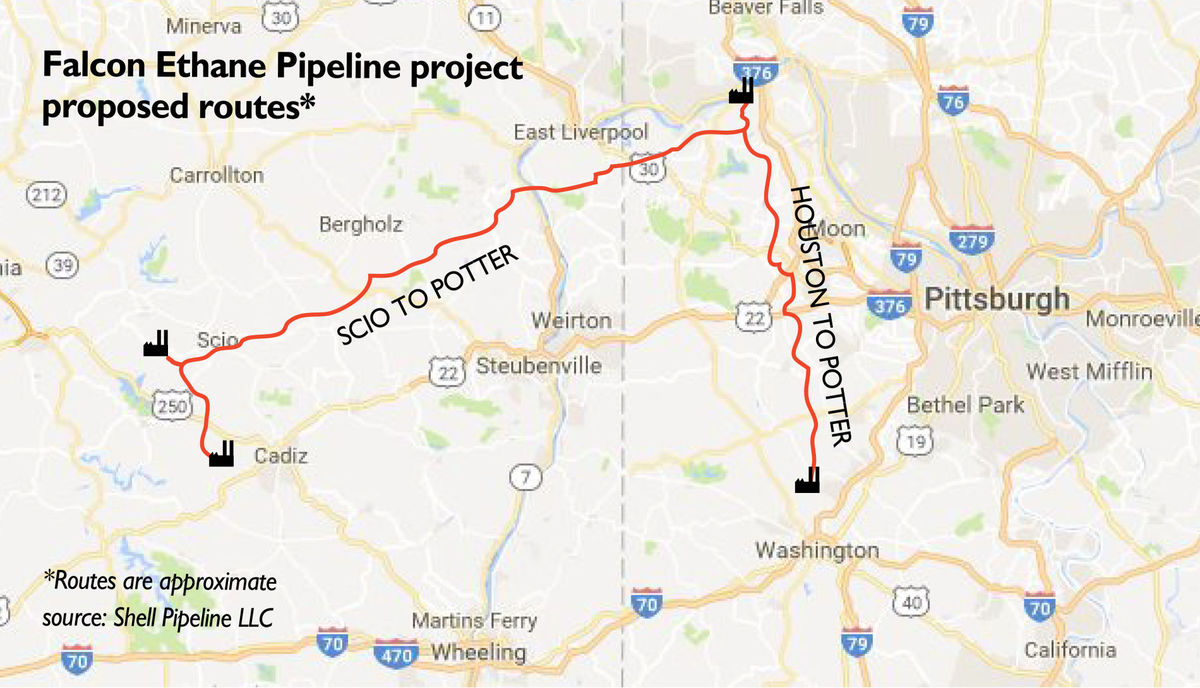
    Click to view a larger version of the map

    Shell’s long-talked about ethane pipeline, called Falcon Pipeline, is finally official. That is, official in the sense that Shell filed an application with the Pennsylvania Dept. of Environmental Protection last week, looking for permission to build it. Brief history: In February 2016, MDN brought you exclusive news that Shell had begun approaching landowners in Beaver County to get them to sign easements for two ethane pipelines to feed the mighty cracker plant they plan to build in the county (see Exclusive: Shell Leasing Land for 2 Pipelines to PA Cracker Plant). At that time Shell had still not fully committed to building the cracker–something they finally did in June 2016 (see Breaking: Shell Pulls the Trigger, PA Ethane Cracker is a Go!). NGI’s Shale Daily broke a story in August 2016 that shed new light on the project–news that Shell is working on a 94-mile ethane “pipeline system” with two “legs” to feed the cracker, confirming the tip we received in February (see Shell Working on 94-Mile Ethane Pipeline to Feed PA Cracker). As NGI reported at that time, the new ethane pipeline system has a name: the Falcon Ethane Pipeline System. In October 2016 Shell launched a binding open season for the Falcon pipeline (see Shell Launches Open Season for PA-WV-OH Falcon Ethane Pipeline). You might justifiably think that with open seasons and a scad of easements signed between landowners and Shell, that the project had already filed for permission to build. Not so. Last week Shell made it official by filing that paperwork–for the portion of the pipeline running through PA…
    Read More “Shell Files PA Application for Ethane Pipe to Feed Cracker Plant”