
Duke Energy | Electrical Generation | Energy Services | Industrywide Issues | Regulation | South Carolina
SC PSC Approves Duke/Santee Cooper 2.2 GW Gas-Fired Power Plant
 Good news! The Public Service Commission (PSC) of South Carolina approved a joint application by Dominion Energy and Santee Cooper to build Canadys Station, a natural gas combined-cycle facility in Colleton County. The plant will generate approximately 2,200 megawatts (2.2 GW) — enough to power over one million homes — addressing the state’s growing energy demand. It will be built on the site of a former Dominion Energy coal plant, roughly 40 miles northwest of Charleston (the “Lowcountry” region), eliminating the need for new land clearing. Read More “SC PSC Approves Duke/Santee Cooper 2.2 GW Gas-Fired Power Plant”
 Virginia is officially rejoining the Regional Greenhouse Gas Initiative (RGGI) carbon tax scheme this July after a liberal court deemed its previous withdrawal under former Governor Glenn Youngkin unlawful. This reentry forces utilities like Dominion Energy to resume purchasing carbon credits—modern-day indulgences for the “sin” of emitting carbon dioxide. The cost will be passed on to ratepayers through monthly bill increases (see
  MARCELLUS/UTICA REGION: Hope Gas, WV launch energy certification training program for students; Well plugging project to protect natural resources; NATIONAL: U.S. natural gas futures gain as weather warms; Climate pseudoscience debunked – livestock methane fears are baseless; Market fundamentals are key to understanding what comes next; INTERNATIONAL: Crude steady following Trump-Xi summit; U.S. officials flag prospect of Chinese energy purchases after Trump-Xi meeting; Delegates say OPEC+ has plan to complete series of quota hikes; U.S. set to displace Norway as Europe’s largest natgas supplier.
  Infinity Natural Resources (INR) shared its first quarter 2026 update yesterday. CEO Zack Arnold said during an earnings call with analysts, “The first quarter was pivotal for Infinity.” How so? INR successfully closed the Antero, Ohio Utica acquisition in late February and added working interest in the company’s Pennsylvania assets through the Chase acquisition. These acquisitions immediately increased INR’s scale (dramatically) by boosting the company’s operated well count from 154 to 395 (more than 1.5 times) and by boosting its midstream system to over 250 miles of gathering and water pipelines.
  It seems that not all of the judges who sit on the U.S. Court of Appeals for the Fourth Circuit (4th Circuit) are clowns, the way the three judges who oversee cases dealing with the Mountain Valley Pipeline (MVP) Southgate project are (see
  Last November, the Pennsylvania Public Utility Commission (PUC) approved a Tentative Order by a 3-2 vote, proposing a statewide model tariff (tax) to manage the growing impact of large-load customers, such as AI data centers, on the electric grid (see
  Pennsylvania Governor Josh Shapiro has been blaming the PJM Interconnection grid for the soaring costs of electricity when his own policies are to blame, even threatening to pull out of the cooperative (see
  About a month ago, MDN brought you the exciting news that a father and son who own land in Upstate New York (not far from MDN HQ) have sued New York State for “taking” their right to allow shale drilling and fracking under their land (see
  In February 2024, members of the South Carolina Public Service Commission approved a proposed project to build a 2,200-megawatt (MW) gas-fired power plant in the state’s Lowcountry, in Colleton County (see
  According to RBN Energy, the Northeast natural gas market is entering a new phase after years of stalled pipeline development and Appalachian takeaway constraints. Once a premium destination for Gulf Coast and Canadian gas, the region became a major supplier as Marcellus/Utica production surged, reversing flows toward the Southeast and Gulf Coast. Recent legal, regulatory, and cost hurdles have frozen major projects, with the Mountain Valley Pipeline serving as both a milestone and a warning. Now, under a friendlier regulatory climate, new expansions toward New York/New Jersey and New England are advancing.
  Energy Transfer LP (ET) owns and operates one of the largest and most diversified portfolios of energy assets in the U.S., with approximately 140,000 miles of pipeline and associated energy infrastructure. ET’s strategic network spans 44 states and includes assets in all major U.S. production basins, including the Marcellus/Utica. The company issued its first quarter 2026 update last week. ET sees the Marcellus/Utica region as a key source of NGL supplies for its export operations, particularly exports from the Marcus Hook terminal near Philadelphia.
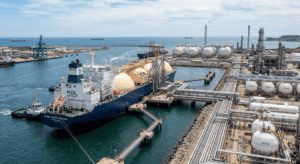
  The Philadelphia Gas Commission, for a second time, has postponed a vote on Philadelphia Gas Works’ (PGW) $182 million proposal to replace and expand its natural gas liquefier (LNG plant) in Port Richmond. The commission’s staff and the Public Advocate recommend rejecting the project, arguing it is oversized and could burden customers with unnecessary debt. They also cite incomplete plant and project designs. PGW argues the upgrade is crucial for safety and affordability, preventing potential harm to customers during cold winters and avoiding the need to truck in liquefied natural gas (LNG). Instead of approving the project, the Commission voted to spend $1 million on an environmental impact study and $4 million for an engineering study. That is, they voted to procrastinate.
  At a Pennsylvania DEP hearing in Indiana County, environmental extremists opposed a proposed 5.8-mile, 30-inch natural gas pipeline serving Homer City Redevelopment’s planned $10 billion, 4.5-GW gas-fired power plant and hyperscale data center campus. The pipeline would cross streams, wetlands, and floodways, potentially affecting Muddy Run, Blacklick Creek, and various tributaries. Reminding us of Chicken Little in The Sky is Falling, speakers warned of water pollution, setbacks to acid mine drainage restoration, drought-related water stress, and inadequate transparency around the fast-moving project.
  The Iroquois Gas Transmission’s Enhancement by Compression (ExC) project will increase horsepower at three compression stations — two in New York and one in Connecticut — by an extra 125 MMcf/d, to flow more Marcellus/Utica gas into New York City and New England. The NY Department of Environmental Conservation (DEC) approved the permits for the NY compressors with the condition that Iroquois pays a $1.5 million “contribution” (we call it a bribe) to the “Disadvantaged Community Benefit Program” (see
  The U.S. Energy Information Administration (EIA) issued its latest monthly Short-Term Energy Outlook (STEO) yesterday. Using the official EIA dartboard, the STEO is the agency’s monthly best estimate of where energy prices and production will go over the next 12 months. There was a revision to the agency’s prediction about the spot price (at the Henry Hub) for natural gas in 2026 and 2027. For the second month in a row, the EIA has significantly lowered its predictions for the HH spot price. Last month, EIA predicted the spot price would average $3.67 per million British thermal units (MMBtus) this year, and $3.59 next year (see