
Caturus to Nearly Double Commonwealth LNG with 7.75 MTPA Expansion
 Four months after pulling the trigger on its $13 billion Commonwealth LNG export plant in Cameron Parish, Louisiana (see Caturus Makes FID to Build Commonwealth LNG Export Plant in La), Caturus is already planning to make it bigger. A lot bigger. On Tuesday, Caturus announced a five-train, 7.75 MTPA (million tonnes per annum) expansion that would take the site from 9.5 MTPA to roughly 17.25 MTPA. That’s an 81.6% increase, or “nearly double” in press-release speak. So what’s in it for the Marcellus/Utica? More than you might think, although not in the way we first thought (more on that below). Read More “Caturus to Nearly Double Commonwealth LNG with 7.75 MTPA Expansion”
 OTHER U.S. REGIONS: Texas Capital’s TXS and OILT ETFs now trading on the Texas Stock Exchange; NATIONAL: U.S. natural gas futures slip ahead of storage data; Climate activism “made me feel like a good person”; INTERNATIONAL: Oil falls as Saudi supply outlook improves; Wind and solar power is old, uneconomic, and government dependent.
  CNX Resources isn’t going anywhere in north-central West Virginia. At a community event at the Blacksville Volunteer Fire Department social hall, CNX Chief Operating Officer Navneet Behl laid out a drilling calendar for the company’s Wadestown operation in western Monongalia County through 2029. CNX has 24 wells already producing on three pads there, is working on six more wells on those same pads, and is building a brand-new pad slated for 13 more wells. The company says it expects to pay about $525 million in royalties on those 19 new wells. That’s the good news. The not-so-good news came from the same guy: Behl admitted CNX can only drill so much in Appalachia because there still aren’t enough pipelines to haul the gas away.
  It took three years, two conditional use applications, one appellate court loss, a subdivision, a three-hour hearing, and a deadline extension — but EQT finally got its vote. On Monday night (Sept. 14), Elizabeth Township’s (Allegheny County, PA) Board of Commissioners voted unanimously to approve two conditional use permits for EQT’s six-well Heracles project: one for the well pad, and one for the interconnect pad (the spot where gas from the wells hands off to a pipeline). The pad sits less than a half-mile from Elizabeth Forward High School, so the approvals come with a long list of strings attached, including a 10-year “emergency preparedness fund” EQT must pay into. Big Green group Protect Elizabeth Township (PET) says it will keep fighting in court. In a surprise twist, the commission president revealed that someone has approached the township about building a data center.
  Texas is still the undisputed king of American natural gas — but Pennsylvania, West Virginia, and Ohio together produced almost as much gas in 2025 as Texas did all by itself. New EIA data confirms Appalachia is America’s second major shale gas hub, and it’s not particularly close behind. The U.S. Energy Information Administration’s annual gross withdrawals table shows the country produced 47.73 Tcf of natural gas in 2025 (gross withdrawals — the total wellhead volume before processing, as distinct from marketed or dry gas figures). Texas alone accounted for 13,603 Bcf, or 28.5% of the U.S. total — nearly double Pennsylvania’s 7,676 Bcf (16.1%).
  The Ohio Department of Natural Resources (ODNR) recently released second-quarter 2026 production numbers. The state’s top natural gas producer was Ascent Resources, with 220,554,117 Mcf (220.55 Bcf) produced during the quarter, averaging 2.42 Bcf/d. Ascent’s production accounted for 41% of the state’s natural gas production. The top oil producer in the state, by far, was EOG Resources, which reports under two names: EOG Ohio LLC (the old Encino Energy assets EOG bought last year) and EOG Resources Inc. Together, they produced 8,846,396 barrels of oil during the quarter, which works out to an average of 97,213 barrels per day. That’s 67% (two-thirds!) of Ohio’s entire oil production during 2Q26.
  The Ohio River Valley Institute (ORVI), the radical anti-fossil fuel outfit that wants to shut down Appalachian shale, is at it again. Today ORVI senior researcher Sean O’Leary published an op-ed in the Ohio Capital Journal claiming that shale’s importance to Ohio’s economy is “small and shrinking.” He lists seven “facts.” We checked every one of them against the same government data he cites. Some are technically true but badly misleading. At least one is flat wrong — by a factor of a million. Here’s what the data actually says.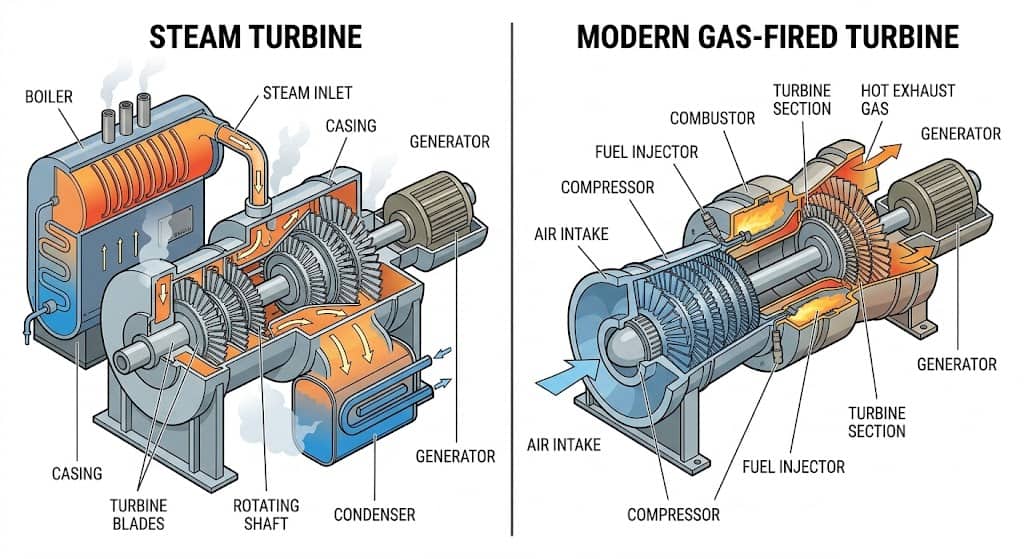
 The fall “turn down the valves” season for Marcellus/Utica gas has arrived, and it showed up about a week early. Last Friday (Sept. 11), the spot price at Texas Eastern M-2 (aka Tetco M-2), the key pricing point for gas produced in southwestern Pennsylvania, West Virginia, and Ohio, averaged $1.435 per MMBtu (million British thermal units, roughly 1,000 cubic feet of gas). That’s 6.5 cents below the $1.50 mark that EQT, the region’s biggest driller, has flagged as its trigger for curtailing (temporarily cutting back) production. So, are shut-ins coming? History says probably, at least for a while.
  Yesterday the U.S. Environmental Protection Agency (EPA) finalized a rule that rips out the heart of the Biden administration’s 2024 power plant carbon regulations. Gone is the requirement that new “base load” natural gas-fired power plants and long-lived coal plants capture 90% of their carbon dioxide (CO2) by 2032. EPA says the repeal will save $310 billion. At the same time, EPA proposed scrapping every remaining greenhouse gas standard for power plants, which it says would save another $370 million. For the Marcellus/Utica, where a parade of big gas-fired power plants is lining up to feed AI data centers, this is very good news.
  Remember Synapse Energy Economics? That’s the Massachusetts consulting outfit that, back in 2023, was paid by two Big Green groups to produce a “report” claiming Pennsylvania’s RGGI carbon tax would lower your electric bill (see
  NextEra Energy and Dominion Energy, which want to combine into the country’s biggest electric utility in a $67 billion deal, launched a full-blown charm offensive (i.e., piles of money) aimed at Virginia yesterday. The two companies unveiled what they call a “transformational” benefits package that doubles bill credits for homeowners (from two years to four), promises 1,000 new direct jobs, and throws in a brand-new office tower in downtown Richmond, paid for by NextEra shareholders. Why all the sweeteners? Because Virginia Gov. Abigail Spanberger says she is “deeply skeptical” the deal is good for her state, and she has formally inserted herself into the regulatory review. Here’s what’s in the new package, how it’s being received, and why it matters to Marcellus/Utica drillers.
  We told you back in July that the two landowners fighting the 2,180-megawatt (MW) Canadys Station gas-fired power plant in South Carolina’s Lowcountry were teeing up an appeal straight to the state Supreme Court (see
  A Syracuse University professor has published a paper in the Journal of the American Planning Association (JAPA) urging towns to treat AI data centers the way they treated fracking a decade ago. Syracuse’s PR department is billing it as “new research” that shows communities how to handle data centers. There’s just one problem. It isn’t really research—by the author’s own admission, no new data was collected. And several of the “facts” about fracking it leans on are flat wrong, especially about Pennsylvania.