
Energy Services | Industrywide Issues | Pennsylvania | Pipelines | Regulation | Statewide PA | Transco | Williams
FERC Approves Atlantic Sunrise for Startup! Pipe Opens Sat. Oct. 6
 Yesterday the Federal Energy Regulatory Commission (FERC) finally (finally!) granted Williams permission to open the taps up and let natural gas flow along the Atlantic Sunrise Pipeline, a 200-mile greenfield pipeline from northeastern to southeastern PA. Startup was delayed two months from Williams’ original estimate (due to Williams, not FERC). But that’s all behind us now. Beginning tomorrow, Marcellus molecules from Cabot Oil & Gas, Chief Oil & Gas, and Seneca Resources will begin flowing along the pipeline, heading out of our region where those molecules will fetch higher prices.
Read More “FERC Approves Atlantic Sunrise for Startup! Pipe Opens Sat. Oct. 6”
 PTT Global Chemical announced in April 2015 they want to build a $6 billion ethane cracker plant complex in Belmont County, OH (see
  There’s only so much you can cram into a 65 character headline. We wanted to say more. Catalyst Energy was, until 2017 (when it quit drilling new wells) a conventional-only oil driller focused mainly on western Pennsylvania. It quit drilling due to low oil prices. Catalyst has just announced that, pending the outcome of a new round of investments it’s seeking, the company will restart its drilling program–but this time with a twist. Catalyst is transforming itself from a conventional to an unconventional driller.

 Some 200 business and government leaders in West Virginia attended the state’s Economic Outlook Conference in Charleston this past Wednesday. A key focus of the event was a panel discussion on the topic of “downstream” natural gas development–meaning ethane cracker plants and manufacturing plants to take advantage of the coming flood of cheap plastics from cracker plants. The speakers spoke of urgency, to prevent a generational opportunity from slipping away.
 The “best of the rest”–stories that caught MDN’s eye that you may be interested in reading: PA PUC sends inspectors to help Massachusetts following pipeline explosions; Large silos delivered via barge to Shell site; Antis gather to plan opposition to PTT Ohio ethane cracker; Massachusetts compressor foes warn of dangers with commercial; Florida governor delays vote on power plant; Natural gas prices are on fire this month — here’s why; FERC nominee’s path to confirmation could be circuitous; Both natural gas supply and demand have increased from year-ago levels; $32B worth of oil, gas M&A deals in 3Q breaks record; US Forest Service seeks ‘streamlined’ oil, gas permit process.
 We’ve seen this movie before. The U.S. Court of Appeals for the Fourth Circuit (quickly becoming the Fourth Circus) has once again listened to the arguments of anti-fossil fuel groups including the Sierra Club and Chesapeake Climate Action Network and has overturned a recently re-issued permit that allows Mountain Valley Pipeline (MVP) to use certain methods to build the pipeline across streams and rivers in West Virginia. The court action pretty much shuts down all work on MVP in WV.
 We’re not quite sure how to tackle this story as there are so many aspects to it. Let’s start here: Two years ago lawsuits filed by some 200 West Virginia residents against Antero Resources were combined into a class action lawsuit. The lawsuits are called “nuisance” lawsuits because, according to the plantiffs, Antero is a nuisance to them (truck traffic, noise, lights at night, etc.). That massive class action lawsuit, filed in early 2016, is about to be heard by the WV Supreme Court–a court in disarray after all of its sitting justices were impeached and removed.
 In June, Apex Power Group said that their planned Guernsey Power Station–a new Utica/Marcellus natural gas-fired electric generating plant proposed for Guernsey County, OH–would break ground this year (see
  We’ve extensively covered the tragic accident and aftermath of Columbia Gas’ natural gas delivery pipelines exploding near Boston in mid-September. The explosions and resulting fires tragically killed one teenager and injured 25 others. It left some 8,600 households and businesses without natural gas–for months. Now anti-fossil fuel advocates say those 8,600 households should just forget about natural gas, forever, and instead convert to sky-high electric for their energy needs. They call it a “green new deal”–meaning make Columbia Gas pay to convert your home to all-electric appliances and heat pumps. We call it a “green raw deal.”
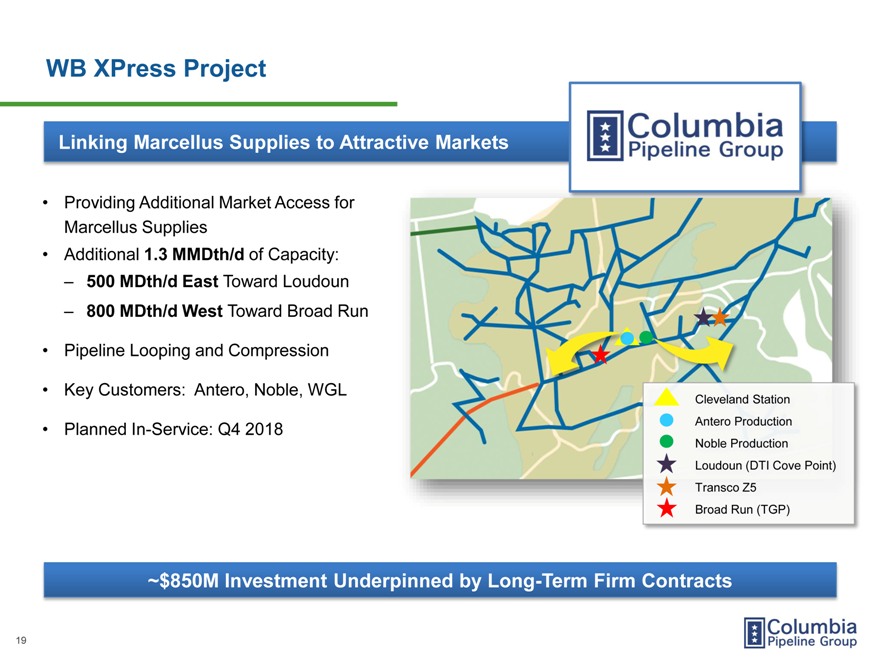
 It seems like we’ve been waiting forever for new pipelines to get built to flow Marcellus/Utica gas to new markets where our gas can fetch higher prices. Finally, with projects like Rover, NEXUS, Atlantic Sunrise and others, forever is here. Our gas is now flowing, or soon will, to markets in the Midwest, South, Gulf Coast, and even via exports to other countries. The experts at RBN Energy have an ongoing series that covers M-U pipelines and how our gas is heading to new markets. RBN says in their most recent post in this series, “in some ways the Northeast really is just getting started.” There are plans for another 10 billion cubic feet per day (Bcf/d) to flow out of here and to other markets by 2023. Where and how?
 In August MDN told you the rumor mill was in overdrive that Trump has already picked a replacement for outgoing Federal Energy Regulatory Commission member Rob Powelson (see
  The Natural Gas Supply Association (NGSA) yesterday released its 2018-2019 Winter Outlook for Natural Gas report (summary below). NGSA says this winter will have warmer than normal temperatures for much of the country. They also predict natural gas demand will reach an all-time high. However, natural gas production will hit all-time highs too. So in the end, prices for natgas (a function of supply and demand) will stay fairly even.