
ARCH2 and MACH2 Hydrogen Hub Projects Keep Fed Funding, For Now
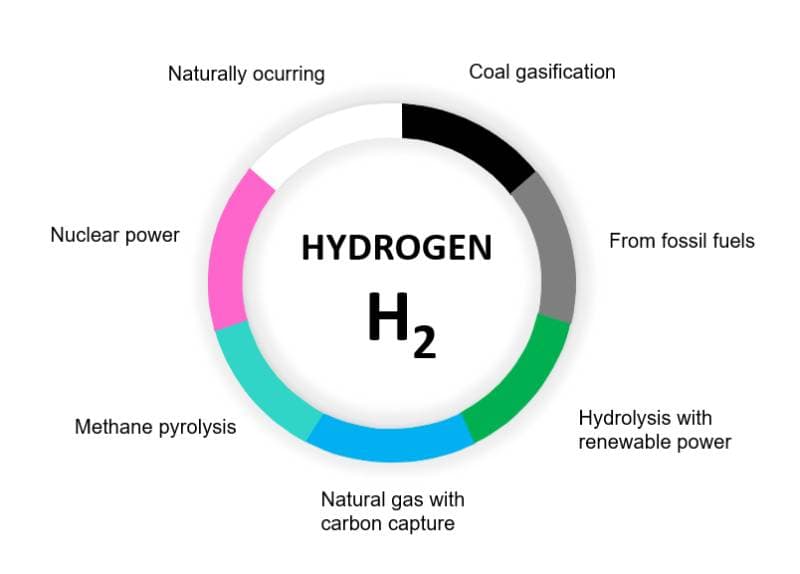
In October 2024, the Bidenistas announced seven hydrogen hub projects (from 33 finalists) that would receive a collective $7 billion in federal funding (see Hydrogen Hub Winners Announced – WV Takes Prize in M-U Region). Among the winners was the West Virginia-led Appalachian Regional Clean Hydrogen Hub (ARCH2), which is a project that will use Marcellus/Utica natural gas as the feedstock to produce “blue” hydrogen, which is hydrogen made from natgas where carbon dioxide from the process is captured and either used or stored underground. ARCH2 qualified for up to $925 million of taxpayer money. Another winner was the Mid-Atlantic Clean Hydrogen Hub (MACH2) project, centered in Joe Biden’s home state of Delaware. MACH2, funded with up to $750 million, would give a few economic table scraps to the Philly area, which excites and titillates PA politicians. Last week, the Department of Energy announced it is canceling funding for two of the seven hydrogen hub projects. Both ARCH2 and MACH2 survived the cuts…for now. Read More “ARCH2 and MACH2 Hydrogen Hub Projects Keep Fed Funding, For Now”
 Last Thursday, energy and labor leaders gathered for the “All About Propane & Energy Reliability” one-day conference, held in Boothwyn, PA (Delaware County, near Philadelphia). The speakers highlighted the significant economic and employment impact of energy production, particularly at the Marcus Hook Industrial Complex. Speakers noted that Pennsylvania is the second-largest natural gas producer, with 12,000 wells producing 7.4 trillion cubic feet of natural gas last year. Marcus Hook, originally a crude oil refinery dating to 1901, now exports propane and ethane globally, supporting hundreds of jobs and generating substantial wages and tax revenue. Projects like the Mariner East 1 and 2 pipelines created millions of man-hours for local trades. Panelists emphasized Marcus Hook’s ongoing growth potential and its central role in local and statewide energy development.
  In January, MDN brought you the great news that the six largest banks in the United States had canceled their memberships in the awful Net Zero Banking Alliance (NZBA), a group of woke banks under the umbrella of the equally terrible United Nations (see
  Carrie Crumpton, Vice President of Environmental Strategy, presented on behalf of CNX Resources at the recent 2025 Shale Insight Conference. Carrie provided an overview and update on CNX’s
  Ohio State University (OSU) is constructing two natural gas combustion turbine generators and one steam turbine generator with a maximum power generating capacity of 105.5 megawatts of electricity and 285 kilopounds per hour of steam. It’s being built on 1.35 acres at OSU’s main campus in Franklin County (see
  DT Midstream, Inc. announced yesterday that it has closed a successful binding open season (signup period) to award expansion capacity on its Guardian Pipeline. DT awarded capacity to five shippers totaling 328 MMcf/d (million cubic feet per day, equivalent to 328,000 dekatherms per day) with a targeted in-service date of November 1, 2028. Guardian is an approximately 260-mile interstate pipeline with a current capacity of approximately 1.3 Bcf/d (billion cubic feet per day) serving key Wisconsin demand centers. And yes, Guardian flows at least some Marcellus/Utica molecules.
  Disappointingly, the Trump Federal Trade Commission (FTC) voted 3-0 to maintain a “consent order” that prevents private equity firm Quantum Energy Partners from owning stock in EQT and prohibits the CEO of Quantum from serving on EQT’s Board of Directors. This is all to do with EQT’s purchase of fellow driller Tug Hill in 2023. In September 2022, EQT announced a deal to buy privately owned Tug Hill Operating’s West Virginia shale assets (90,000 acres and 800 MMcf/d of production in West Virginia) for roughly $5.2 billion (see
  Gas-fired power plants in the Marcellus/Utica region (and beyond) continue to change hands at a rapid pace. In May, Vistra Corp. announced a deal to acquire seven natural gas-fired power plants, totaling approximately 2,600 MW of capacity, from Lotus Infrastructure Partners (see
  Although we’re seeing an increase in both natural gas demand and production, combining these factors with relatively normal winter weather, economic indicators and natural gas storage levels, the Natural Gas Supply Association (NGSA) is projecting “flat” pressure on natural gas prices compared to last winter, according to the NGSA’s annual Winter Outlook forecast of the wholesale winter natural gas market (full copy below). The NGSA 2025-2026 Winter Outlook, a forecast of the wholesale winter natural gas market, compared the upcoming winter to the winter of 2024-2025 when the average Henry Hub price of natural gas was $3.76 per MMBtu. “Winter” is defined as the period from November through March, the industry’s traditional winter heating season.
  In August, EOG Resources, one of the largest oil and gas drillers in the U.S. (with international operations in several other countries) and a Fortune 500 company, closed on the $5.6 billion purchase of Encino Energy, adding 675,000 net acres in the Utica and over 1,000 operating shale wells (see
 Mon Power and Potomac Edison are local utilities and subsidiaries of FirstEnergy Corp. The two companies recently submitted an Integrated Resource Plan (IRP) to the West Virginia Public Service Commission, outlining how they will continue to deliver reliable, cost-effective power to West Virginia homes and businesses over the next decade. The big news (for us) is that the companies are seriously exploring the possibility of building a new 1,200-megawatt natural gas combined-cycle power plant, which is expected to be operational around 2031.
  Here’s a court case that slipped under our radar. Antero Resources Corporation challenged the Federal Energy Regulatory Commission’s (FERC) approval of a two-tier fuel rate structure imposed by Tennessee Gas Pipeline Company (TGP) following an expansion project. Antero had contracted with TGP to secure firm transportation capacity by funding the construction of new compressor stations, which are energy-intensive and require substantial fuel to operate. The tariff approved by FERC stipulated that Antero would always be charged the highest marginal fuel rate, as if its gas were the last and most expensive to transport through the pipeline. In contrast, other shippers paid an average fuel rate, leading to Antero paying two to three times the fuel rate of other shippers on the same pipeline segment.
  Speaking at the Sept. 30 Northeast Energy and Commerce Association 2025 Fuels Conference, gas pipeline executives expressed optimism that shifting federal and state politics in New England are creating opportunities for natural gas infrastructure expansion. Panelists emphasized the need to alleviate regional gas constraints to support the growth of electric generation and data centers. Speakers also highlighted the complementary role of LNG infrastructure, the challenge of financing new pipelines, and urged Massachusetts to reconsider strict decarbonization targets to ensure energy reliability.
  The State of Maryland opened the door on Tuesday to a program that could, theoretically, fast-track energy projects through the state’s regulatory process in hopes of boosting the amount of power generated in the state. For the next 30 days, the Public Service Commission (PSC) will accept applications for large-scale power projects, also known as “dispatchable” generation, which can provide energy quickly during periods of peak demand. The problem is that this effort is merely window dressing. It’s a pretense. No major new natural gas power plants will be built in the state.
  In January 2023, Ohio House Bill (HB) 507 became law with the signature of Gov. Mike DeWine (see