
How AI Data Centers Lost the PR War; Dems Swear Off Using AI
 A rare bipartisan backlash against AI data centers has emerged, with more than 70 state and local governments passing restrictions or moratoriums due to concerns about water use, electricity consumption, noise, and utility rate hikes. Critics span the political spectrum, from Bernie Sanders and Alexandria Ocasio-Cortez to conservatives like Pennsylvania State Treasurer (and Republican candidate for Governor) Stacy Garrity. Public relations experts blame the industry’s failure to build trust, communicate transparently, and engage communities early, comparing tech companies’ top-down approach to the tobacco industry’s playbook. The consequences are mounting: 25 data center projects were canceled in 2025 — quadruple 2024’s total — while roughly 99 of 770 planned projects face local opposition. Pennsylvania is at risk of forfeiting some $92 billion in private investments (see Pittsburgh Energy Event Truly Mind-Blowing, $92B+ Investments for PA). Read More “How AI Data Centers Lost the PR War; Dems Swear Off Using AI”

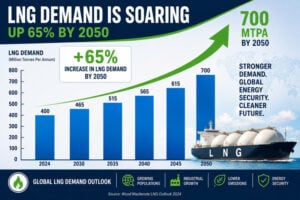 Shell, which dropped “Royal Dutch” from its name after leaving the Netherlands in 2022 due to high taxes and overregulation, is one of the world’s supermajors (oil and gas driller). Shell is also one of (perhaps THE) largest producers and vendors of LNG, or liquefied natural gas, worldwide. The company has just released its tenth annual LNG Outlook 2026 (full copy below), which highlights key trends in 2025 and hauls out the crystal ball to predict where things are heading over the next 25 years. Shell’s annual LNG outlook says shipping disruptions in the Strait of Hormuz from the Iran war—which shut in roughly one-fifth of global monthly LNG supply—could keep 2026 global LNG trade flat if flows normalize within three months, with growth resuming in 2027.
  MARCELLUS/UTICA REGION: Data center supporters and critics argue over future in Pittsburgh area; OTHER U.S. REGIONS: Gas production climbs faster than oil in Permian; Virginia’s return to RGGI is another ratepayer rip-off in the making; NATIONAL: U.S. natural gas futures rise on summer demand; Study projects $1 trillion needed for U.S. energy infrastructure by 2052; INTERNATIONAL: Oil slides to fresh five-month low as oversupply signals mount; Russia oil price falls to pre-Iran war level in blow to Kremlin; Qatari LNG carrier struck in Hormuz, testing US talks; Washington’s plan to neutralize Iran’s Hormuz leverage; Securing the oil and gas resources of the future.
 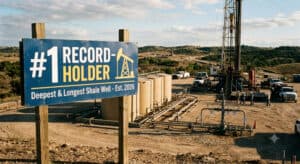 EQT Corporation, the largest driller in the Marcellus/Utica (based on M-U production), recently achieved two records with the same Marcellus well. EQT drilled not only the “deepest” shale well in the continental U.S. (by “measured depth”), but also the longest horizontal shale well (by lateral length). EQT’s Longwell 9H well, located in Wetzel County, West Virginia (near the Pennsylvania border), eclipses a record set by Expand Energy in 2025 in Marshall County, WV.
  Williams’ Transco Southeast Supply Enhancement Project (SESE) is a 55-mile, 42-inch-wide pipeline that will run through Pittsylvania County, Virginia, and Rockingham, Guilford, Forsyth, and Davidson counties in North Carolina. Construction for SESE started March 2, 2026, according to FERC filings. Transco (Williams) received its final federal authorization and a Notice to Proceed, and crews mobilized in early spring. Initial activities have included tree felling, installation of acoustic barriers, and test drilling in preparation for blasting. Antis finally gave up trying to block construction of SESE in June (see
  We spotted a press release from Hexagon Agility that the company has secured its largest-ever single order for “Mobile Pipeline” modules from Certarus, valued at about $100 million, with an option for up to $25 million more by 2028. It triggered a “connect the dots” moment for us. Mobile pipelines are another term for virtual pipelines, which is a euphemism for trucking natural gas via CNG (mostly) and sometimes LNG. The Hexagon press release indicates strong new demand for such technology in the AI data center market. No pipeline? No problem! Just truck it in via a virtual pipe instead.
  Global research firm Wood Mackenzie warns that a decade of cheap U.S. natural gas is ending, with Henry Hub prices—historically stuck between $2 and $4 per MMBtu—expected to approach $5 by 2035. The shift is driven by surging demand from LNG exports and AI data centers. U.S. LNG exports jumped from 0.5 Bcf/d in 2016 to 15.0 Bcf/d in 2025, with capacity expected to nearly double by 2031. Meanwhile, power-sector demand could require an additional 17 Bcf/d by the mid-2030s. Supply-side tailwinds—prime drilling acreage, cheap associated gas, and annual productivity gains—have largely run their course. WoodMac says $5 gas remains globally competitive.
  Over the past two weeks, just prior to heading out on summer vacation, the U.S. Supreme Court issued a number of extremely important decisions. One of them was Slaughter v. Trump, a 6-3 decision in which the Supremes overturned the 91-year-old Humphrey’s Executor precedent, granting the president broad authority to remove members of independent federal agencies for any reason. Chief Justice John Roberts wrote that the president must have trusted subordinates to ensure accountability, though the Court exempted the Federal Reserve to preserve its independence. This ruling permanently solidifies President Trump’s earlier removals of Democratic appointees, significantly expanding executive control over critical regulatory bodies, including the National Labor Relations Board, the Federal Trade Commission, and most importantly for MDN readers, the Federal Energy Regulatory Commission (FERC).
  Last week was (once again) noteworthy for the Baker Hughes rig count. Although the Marcellus/Utica count didn’t budge, the national count increased by another 7 rigs. The national count has risen over the last three weeks — by 18 rigs! The new national count, 580, is also the highest the combined count has been since May 2025. The combined M-U rig count remained at 36 active rigs for the eighth consecutive week. The M-U’s chief competitor, the Haynesville, maintained its count of 55 active rigs, operating 19 more than the M-U.
  The Marcellus/Utica region received 31 new drilling permits last week, June 22 – 28, the very same number issued two weeks ago! Can’t remember the last time that happened. Last week, Pennsylvania issued just 5 new permits. Ohio issued 13 new permits. West Virginia also issued 13 new permits last week. The drillers who received new permits included: Antero Resources, EOG Resources, EQT, Expand Energy, Infinity Natural Resources, Laurel Mountain Energy, and Pennsylvania General Energy.
  Ohio’s Utica shale boom ignited around 2011 in northeastern counties, with Carroll County emerging as the epicenter of early drilling. Operators like Chesapeake Energy targeted the oil and liquids-rich “wet gas” windows in Carroll, Columbiana, and Harrison counties. However, as operators refined their geologic understanding, they discovered the formation’s most prolific “dry gas” window lay to the southeast. Development steadily migrated toward Belmont, Monroe, Jefferson, and Guernsey counties, where deeper, overpressured rock formations yielded massive volumes of natural gas. By the mid-2010s, these southern counties dominated Ohio’s Utica production, eclipsing the northern pioneers that first proved the play’s potential. However, three years ago, Encino Energy “cracked the code” on Ohio Utica oil drilling, and activity began migrating north again (see
  Data center growth is rapidly reshaping Northeast power and natural gas markets, with projects clustering near transmission lines, substations, gas-fired power generation, and pipeline corridors. Virginia remains the epicenter, led by Northern Virginia’s massive hyperscale hub and tens of gigawatts of planned capacity. Ohio is emerging fast around Columbus, with more than 15 GW proposed. Pennsylvania could become a major growth story, pairing Marcellus/Utica gas resources with large campuses such as Homer City’s planned 4.5-GW gas-fired/data center redevelopment. However, PA is attempting to shoot itself in the foot with talk of both short- and long-term moratoriums on new data center construction. So, the jury is still very much out on how successful PA will be with data centers.
  Yesterday, pipeline giant Williams announced the appointment of Lloyd W. “Billy” Helms Jr. and Robb E. Turner as its newest board members, expanding its board from 10 to 12 members. Helms brings more than 40 years of oil and gas experience, including senior leadership roles at Utica driller EOG Resources, where he served as president and chief operating officer. Turner brings 35-plus years of experience in energy operations, finance, and investing, including co-founding ArcLight Capital Partners and serving as chair of The Madava Group and Revenant Energy. The question is, how do these two additions connect to and impact Williams’ Marcellus/Utica operations?
  In April, MDN reported that PowerTransitions, an independent power producer specializing in redeveloping legacy power facilities, had agreed to acquire five New York gas-fired power plants — Batavia, Hillburn, Massena, Shoemaker, and Sterling — totaling 323 megawatts (MW) from Alliance Energy Group affiliates (see