
AI | Electrical Generation | Energy Services | Hope Utilities | Industrywide Issues | Mason County | Pipelines | West Virginia
Hope Gas Announces 30-Mile M-U Pipeline to WV Data Center Campus
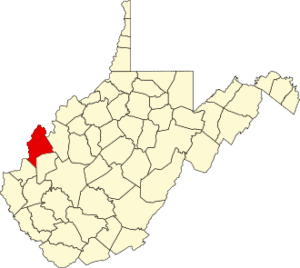
Yesterday, West Virginia Governor Pat Morrisey and utility company Hope Gas announced a $250 million investment to expand natural gas infrastructure in Mason County, West Virginia. The centerpiece is a 30-mile, 24-inch pipeline scheduled for construction between April and December 2026. This pipeline, dubbed the “Prosperity Line,” is designed to power major regional developments, including an initial 2 gigawatts (GW) of power generation at the AIPC Monarch Compute Campus, natural gas for Babcock and Wilcox projects, and extending natgas service to local homes and small businesses. Read More “Hope Gas Announces 30-Mile M-U Pipeline to WV Data Center Campus”
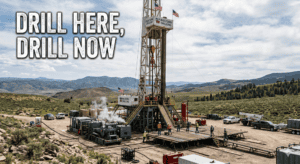 During the Pennsylvania House Appropriations Committee hearing held on March 2, House Republicans advocated for expanded shale gas drilling on state forest lands and beneath state parks to bolster revenue. Department of Conservation and Natural Resources (DCNR) Secretary Cindy Adams Dunn, a radical leftist, noted that current drilling provides an average of $95 million annually but has already caused the “loss” of 30,000 acres of core forest land. Republican members suggested that revising the long-term leasing moratorium could generate an additional $250 million, which fell on deaf Democrat ears.
  Olympus Energy (now owned by EQT) drills in the Greater Pittsburgh region, in Allegheny and Westmoreland counties. In 2021, Olympus applied to build a new well pad in a rural part of Allegheny County, in West Deer Township. So-called “concerned citizens” got amped up to oppose the project. They succeeded when town supervisors rejected the Dionysus well pad (see
  As the conflict with Iran and the halt in LNG production in Qatar triggered a 100% spike in European natural gas prices, U.S. liquefied natural gas (LNG) has solidified its role as a critical global energy stabilizer. Following the 2022 invasion of Ukraine, the U.S. became Europe’s primary supplier, a shift highlighted at a recent Pittsburgh energy conference. EQT CEO Toby Rice and other Pennsylvania producers argue that expanding Marcellus Shale exports is essential for allied security. Despite infrastructure bottlenecks, U.S. LNG exports are projected to grow significantly by 2030, offering a reliable alternative to volatile Middle Eastern and Russian energy supplies.
  Although there are legitimate concerns over data centers locating in populated communities (noise, water use, etc.), make no mistake: The anti-data center movement is nothing more than the anti-fracking movement in new clothes (see
  The Oil and Gas Climate Initiative (OGCI) is a CEO-led initiative comprising 12 of the world’s leading energy companies that have sold out and pledged allegiance to the cockamamie “net zero” future and the 2015 Paris Agreement. OGCI’s members are Aramco, BP, Chevron, CNPC, Eni, Equinor, ExxonMobil, Occidental, Petrobras, Repsol, Shell, and TotalEnergies. Shame on them all. The OGCI is now colluding with the so-called Carbon Mapper in “a new collaboration aimed at accelerating practical and measurable reductions in methane emissions from the oil and gas industry.” They’re all zealous about solving the fugitive methane problem, but only 21% of it comes from the O&G sector.
  MARCELLUS/UTICA REGION: Local officials, water boards to call for injection well moratorium at Marietta meeting; OTHER U.S. REGIONS: NY haunted by closing of nuclear power plant as energy bills soar, green mandates spark chaos; Why Hormuz hits the West Coast (California) hardest; NATIONAL: U.S. natural gas gains on Middle East turmoil, weather outlook; Muddling the judiciary’s understanding of science; The U.S. has oil insurance; U.S. LNG production ramps up, but Qatar shortfall looms; INTERNATIONAL: Oil price goes higher even after Trump pledge; Analyst outlines 2 potential scenarios for Iran conflict; Oil is Iran’s weapon of choice; Conflict in Iran and the global oil market.
  Last week, EOG Resources reported strong full-year 2025 results, earning $5.0 billion in net income and returning $4.7 billion in free cash flow to shareholders. For 2026, EOG announced a $6.5 billion capital plan targeting 13% total production growth and increased operational efficiency. A central component of this strategy is EOG’s Ohio Utica play, which the company has identified as a top priority alongside the Delaware Basin and Eagle Ford. Following its transformational Encino Energy acquisition last August, the company expects significantly higher activity in the Utica throughout 2026.
  Last week, RBN Energy held its GasCon 2026 conference in Houston, Texas. Among the heavy hitters who attended and spoke at the event were Sital Mody, President of Natural Gas Pipelines at Kinder Morgan, and Dan Brouillette, the 15th Secretary of the U.S. Department of Energy. Mody had this to say during his talk: “When I take a step back and reflect on the natural gas industry, the one thing that comes to mind for me is all gas, no brakes.”
  Although the Iran war has caused shipping, including oil shipping, to temporarily stop through the Strait of Hormuz, the bigger story is how the war currently is, and will continue to, affect the price of natural gas around the globe. Yesterday, QatarEnergy announced it is suspending production at the world’s largest LNG export facility following attacks by Iran. Qatar accounts for 20% of global LNG capacity, so its decision removes 20% of the market’s LNG supply for now. It represents the most significant market shock since Russia’s invasion of Ukraine in 2022. Dutch TTF Natural Gas Futures (the European benchmark, like our own Henry Hub) for April 2026 have surged 85% since Friday, trading near €59.62 following a 33.97% jump earlier today.
  U.S. LNG exporters are scrambling to capitalize on a 50+ percent price surge in European and Asian markets following an Iranian drone attack that halted production at Qatar’s massive Ras Laffan plant. Leading U.S. exporters like Venture Global and Cheniere Energy are maximizing output (squeezing every extra molecule out they can from existing plants) and rerouting cargoes to meet global shortages. While the U.S.’s flexible export contracts provide critical market stability, experts warn that American capacity cannot fully replace Qatar’s lost volumes, which account for 20% of global supply. Unless production resumes shortly, the world faces a more severe energy crisis than the 2022 Russian gas shock.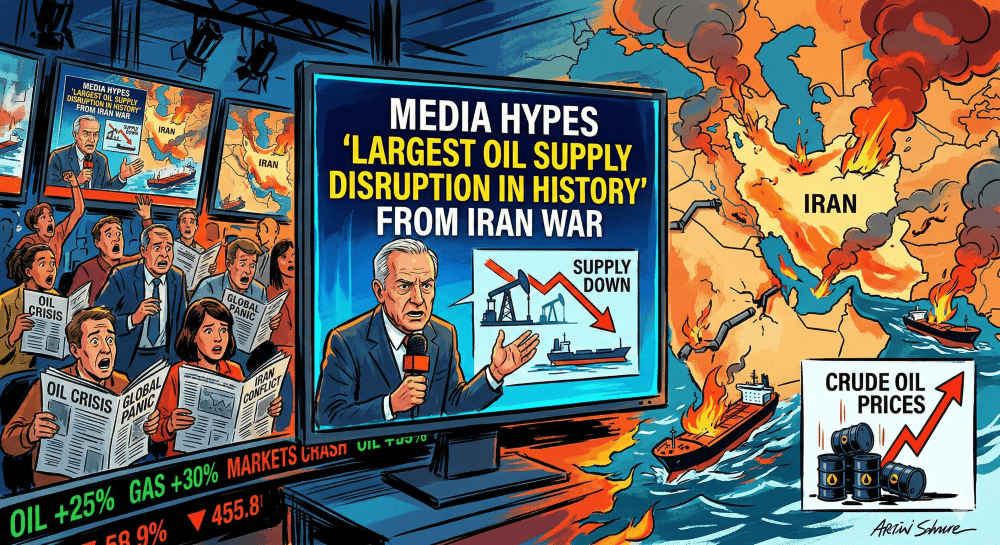

 On Friday, Baker Hughes reported that the U.S. rig count lost 1 rig and now stands at 550 active rigs. Three weeks ago, the Pennsylvania Marcellus added a rig, bringing PA’s total to 20 active rigs, the most it has operated in well over a year. PA kept its new/higher total last week. Both Ohio and West Virginia remained at 13 and 7, respectively. The combined M-U count was 40 rigs last week, the most operated rigs in well over a year, now for a third week in a row. The M-U’s primary competitor (for attention and money), the Haynesville, continues to operate 52 rigs (12 more than the M-U).