
Liberal DC Court Tells EPA It MUST Adopt Obama Methane Rules
 The federal Environmental Protection Agency (EPA) wisely move to begin the process of rolling back Obama-era regulations on methane, designed to regulate the oil and gas industry, last month (see Beginning of the End: EPA Issues 90-Day Stay for Methane Rule). Big Green groups with deep pockets sued a few days later, claiming the agency that instituted the rules in the first place (the EPA) shouldn’t be able to roll back the rules they themselves made up. Egregious, over-reaching rules. A liberal federal court in DC somewhat agreed, telling the EPA they have to justify themselves (see Liberal DC Court Asks EPA to Respond to Lawsuit by Radical Enviros). Now, the liberal DC court has decided the EPA can’t un-decide what it previously decided, even though it clearly has the right and power to do so. On Monday, the U.S. Kangaroo Court of Appeals for the District of Columbia Circuit ordered to EPA to move forward with the Obama-era methane rules…
Read More “Liberal DC Court Tells EPA It MUST Adopt Obama Methane Rules”
 Keane Group is a Texas-based oilfield services company that provides fracking, wireline and top-hole air drilling services to oil and gas companies in the Marcellus/Utica as well as several other major basins. In January 2016, Keane announced they were buying out Canadian-based Trican Well Service for $247 million (see
  Here’s a fact: Fossil fuels have provided more than 80% of total U.S. energy consumption for more than 100 years. Here’s another fact: Fossil fuels provided 81% of America’s energy consumption in 2016–last year. What about all those precious so-called renewables? They provided a little over 10% of our energy needs. However, don’t confuse “renewables” with “solar and wind,” because renewables also include biomass and hydro. If you look only at wind and solar, they provided around 2.5-3% of our overall energy needs last year. When some crackpot claims we could just flip a switch and begin using all renewables anytime before the next 100 years, you know they’re delusional. Ain’t, gonna, happen. You read it here first…
 The natural gas market in the United States is big and complex, with a lot of moving parts. When MDN editor Jim Willis began working in the market full-time in 2012, he learned from some of the best in the business–the people at Natural Gas Intelligence (NGI). There’s a whole lot more to our wonderful market than just drilling wells for natural gas, the “upstream” part of the business. There’s also pipelines, processing plants and compressor stations–the “midstream”; and petrochemical plants, LNG exports and other end users, the “downstream.” Perhaps one the key lessons Jim learned early on in working with NGI is ours is a market driven solely by price. And not just one price! Yes, the Henry Hub in South Louisiana is the most quoted price point in the world when it comes to natgas. Indeed, it forms the basis price against which all other trading points are measured. But Jim learned early on there isn’t just one price for natural gas, there are many (hundreds!) of prices for natural gas, because natural gas is traded at hundreds of different locations along pipelines, all around the country. When Jim was being taught about the markets and prices and why and where drillers decide to drill, driven by price, one of the key resources used to teach Jim was the NGI Map of Shale & Resource Plays in North America. It was a revelation that made a lasting impression when Jim’s tutors walked him over to the NGI map hanging on the wall and pointed out all of the different shale plays, pipelines, and trading points along those pipelines. Suddenly, the complex world of natgas with its many moving parts snapped into place. It was now understandable. NGI’s wall map is the tool that did that for Jim. Perhaps it can do the same for you…
 The “best of the rest” – stories that caught MDN’s eye that you may be interested in reading. In today’s lineup: OH radicals oppose Trump FERC nominees, want to hold up projects; PA lawmakers look for funds to balance budget (incl. severance tax); LNGL gets $1.5B to build Magnolia LNG project; enviro research group exposes flawed anti fracking health studies; lowest price for gas in 12 years – thx to fracking; Mammoth Energy, little but strong; Carrizo shuffles assets; why enviro awareness doesn’t translate into green behavior; and more!
 MDN has extensively covered the story of a family in Huntingdon County, PA radicalized by the Big Green movement into opposing the Mariner East 2 pipeline across their property. The Gerhart family, with the assistance of what Sunoco Logistics Partners calls “eco-terrorists,” have pledged to illegally block construction of the pipeline. So a few weeks ago Sunoco asked a Huntingdon County judge to grant an injunction against the Gerharts AND the interloping eco-terrorists–to have them forcibly removed if they attempt to stop construction which is about to begin (see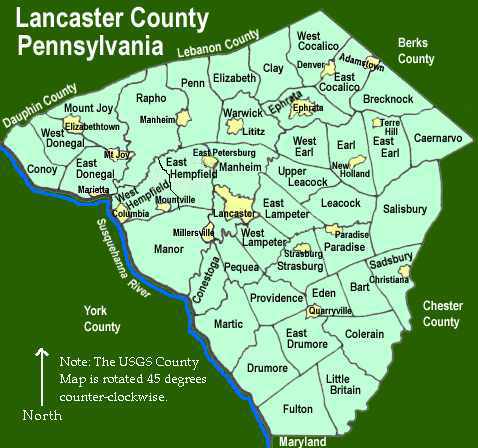

 A liberal Democrat County from the Washtenaw County, Mich. Board of Commissioners, someone who obviously ignores the rule of law, has pledged to break the law in her misguided attempt to stop Energy Transfer’s Rover Pipeline project from coming through her county. Lib Dems often like to pick and choose which laws they will obey and which they’ll ignore, so we’re not surprised by the mouthy reaction from Commissioner Michelle Deatrick, D-Superior Township. She’s like many other radical anti-fossil fuelers. Michelle is an Al Gore fan and has apparently overdosed on trailers for Gore’s forthcoming Inconvenient Truth Part Deux fictional flick, called “Truth to Power,” because that’s the exact phase she used at a recent board meeting. Here’s what mouthy Michelle had to say…
 We’ve written a fair bit about Velocys, a UK-based gas-to-liquids (GTL) company, over the past several years (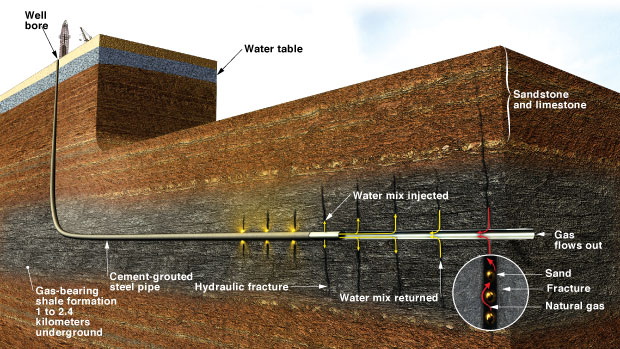
 Although we understand self-interest and wanting to protect one’s profit margin, we continue to be distressed that some of the biggest chemical companies in the world (meaning in the U.S.) are still actively trying to block approvals for more LNG export facilities. Why? They want the natural gas they buy (in very large quantities) to be as cheap as possible. In April, Big Chemical–companies like Dow Corning, BASF, Eastman Chemical and others–via their trade association Industrial Energy Consumers of America (IECA) launched an effort to try and persuade Energy Secretary Rick Perry and the Trump Administration to create barriers to exports of natural gas, ’cause you know, it’s “America First” now baby, and we want that gas all to ourselves (see
  Events related (or of interest) to the Marcellus and Utica Shale, primarily pro-drilling events.
 Last December Spectra Energy pushed the pause button on their Access Northeast Pipeline project, a roughly $3 billion project in New England to connect four existing pipeline systems (with enhancements): Texas Eastern, Algonquin Gas Transmission, Iroquois and Maritimes & Northeast (see