
Dominion 3 GW Gas Plant Clears First Hurdle in Cumberland, VA
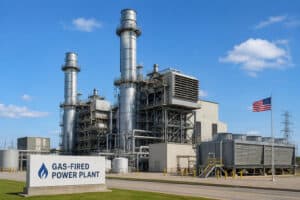
 Back in May we told you Dominion Energy had brass you know what announcing a monster 3,000-megawatt (3 gigawatt) gas-fired power plant in Cumberland County, Virginia, while its much smaller Chesterfield peaker project was still stuck in the mud after three years of green lawfare (see Dominion Energy Floats Plan for New 3 GW Gas-Fired Power in Virginia). Last night, Dominion got its first “yes” for this huge new project. The Cumberland County Planning Commission voted 5-1 to recommend approval of a conditional use permit for the Cumberland Energy Center, and voted 6-0 that the project squares with the county’s comprehensive plan. It happened after hours of public comment — and after a rally of yellow-shirted opponents outside the meeting hall. One down, a bunch to go. Read More “Dominion 3 GW Gas Plant Clears First Hurdle in Cumberland, VA”
 Here’s a pipeline fight where the bad guys aren’t the greens. Last Friday, the U.S. Court of Appeals for the D.C. Circuit sided with the Federal Energy Regulatory Commission (FERC) and Enbridge subsidiary East Tennessee Natural Gas (ETNG), tossing out a challenge brought not by environmental radicals but by the pipeline’s own customers — a group of small-town gas utilities in Tennessee, Virginia, and Alabama who said they were being stuck with the bill for an upgrade they never asked for.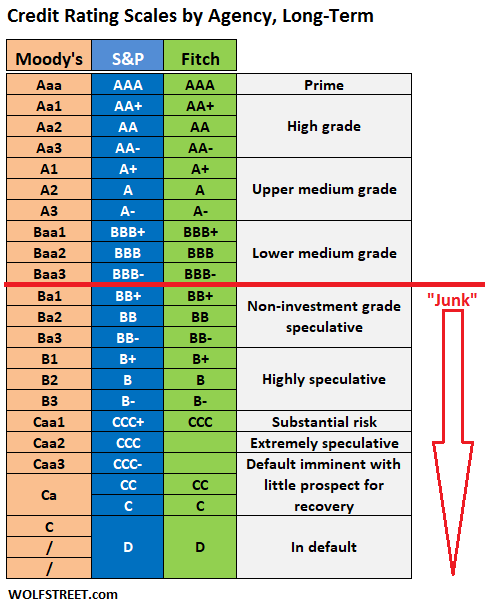
 In April, we told you the Federal Energy Regulatory Commission (FERC) was taking a fresh look at the revived Constitution Pipeline and the associated Wright Interconnect project, and that the agency had to decide whether a relatively quick Environmental Assessment (EA) would do the job — or whether it would drag the projects through a full-blown, years-long Environmental Impact Statement (EIS). We got our answer on August 21. FERC staff issued the EA for both projects — 79 pages plus appendices — and the bottom line is the one supporters have been waiting on: building Constitution “would not constitute a major federal action significantly affecting the quality of the human environment.” In plain English — no significant impact. No years-long supplemental EIS is needed.
  A group of North Fayette Township (Allegheny County, PA) residents who tried to block a Range Resources well pad has lost its appeal — not because a court weighed their evidence, but because they live too far away to sue. The Pennsylvania Commonwealth Court ruled August 25 that Stephen Bates and Heather Forster, who share an address more than two miles from the proposed pad, lack “standing” — the legal right to bring a case — to challenge the township’s approval in court.
  Last week, we covered Enterprise Products Partners signaling a “rate reset” on ATEX, the ethane pipeline that carries Marcellus/Utica ethane to Mont Belvieu (see
  Iroquois Gas Transmission System’s Enhancement by Compression (ExC) project has cleared FERC. It has cleared New York. The one thing standing between it and a shovel is a state air permit for two gas-fired compressor units in Brookfield, Connecticut. The Hartford Courant checked in on that fight yesterday — and buried the two most important facts halfway down the story. Quick refresher for anyone joining late: ExC is a $272 million upgrade that adds horsepower at three existing compressor stations — Dover and Athens in New York, Brookfield in Connecticut. No new pipe. Just more compression, squeezing an additional 125 MMcf/d (125 million cubic feet per day) through the existing 414-mile line into New York City and New England. That’s roughly a 10% throughput gain on a line that already exists, feeding two of the most gas-starved, highest-priced energy markets in the country. (The Courant puts the project at $275 million; we’ve used the $272 million figure Iroquois has cited. Small gap, worth pinning down.)
 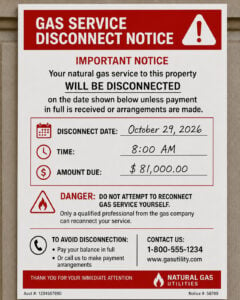 Ohio pumped roughly 2 trillion cubic feet of natural gas out of the ground last year, most of it from the Utica Shale. And yet 43 families in Washington County are being told to find another way to heat their homes by October 29 — because the wells that feed their gas line are running out of gas. The Marietta Times and the Parkersburg News & Sentinel both reported last week that Knox Energy has notified 43 customers in the Belpre area that their natural gas service ends October 29. The reason isn’t a billing dispute or a rate case. It’s geology.
  The government of New Brunswick, Canada, granted conditional approval last Friday for a 500-megawatt natural gas power plant that provincial officials say is needed to keep the lights on and prevent rolling blackouts within two years. The Canadian Press story that broke the news never asked the obvious question — the one a half-dozen readers asked in the comments section instead. Where does the gas come from? Answer: Appalachia. Or Qatar. Anywhere, really, except New Brunswick, which has outlawed fracking since 2014.
 Nineteen months after TECfusions bought the old Alcoa research campus in Upper Burrell (Westmoreland County), PA, and promised to build 3 gigawatts of gas-fired AI computing capacity, the company announced yesterday that the site is live and delivering GPU capacity to a paying customer. It’s a small first bite of a very large apple—but it’s real, it’s running on gas turbines today, and it sits on top of Marcellus wells the company already owns.
  When we covered DTE Energy’s second quarter results in July, we grumbled that the company was throwing $10 billion at unreliable renewables and only $2.5 billion at a single new gas plant to replace a retiring coal fleet (see
  Back in June, we praised South Strabane Township in Washington County, PA, for doing the hard, unglamorous work of writing data center rules instead of slamming the door shut (see
  South Carolina’s utility regulators voted unanimously yesterday to let a $2.8 billion artificial intelligence data center in Spartanburg County build and run its own 457-megawatt natural gas power plant without asking the state’s permission first. The decision is a big win for the “behind-the-meter” model — where a data center brings its own generation instead of leaning on the grid — and it’s a model that is going to burn a lot of molecules. Possibly some of ours.
  A press release crossed the wire yesterday announcing that Edge LNG — the little company that showed the Marcellus how to truck its stranded gas to market — has been sold. Sapphire Gas Solutions of Conroe, Texas, is the buyer. Blue Water Energy, the private equity firm that backed Edge from the beginning, is the seller. And here’s the part that caught our eye: the announcement calls Edge “a Texas-based LNG company” serving customers in the Southern U.S. The Marcellus, where Edge made its name, doesn’t get a single mention.
  Sixty-two days after a wastewater pipeline let go at Equitrans’ Richter impoundment in Aleppo Township, Greene County, the Pennsylvania Dept. of Environmental Protection (DEP) went back out to look at the site on August 18 — and didn’t like what it found. Contaminated water is still moving, soil is still dirty, and DEP says the cleanup has largely stalled. Quick refresher for those just tuning in. On June 17, 2026, Equitrans Water SVC (PA) LLC — the water-handling arm of EQT — reported a wastewater release from a pipeline tied to its Richter Shale Gas Water Impoundment while the site was being reclaimed. DEP issued a cleanup order on June 30 requiring the company to stop contaminated water from migrating off site and from reaching ground or surface water.