
Study: RGGI Carbon Charge Now Costs More Than the Gas It Taxes
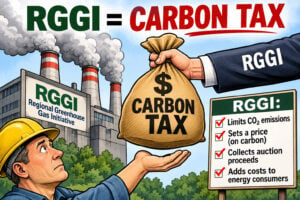 A new study by the Fiscal Alliance Foundation, a free-market think tank in Massachusetts, says the Regional Greenhouse Gas Initiative (RGGI) could add about $1.49 billion to New England’s wholesale electricity costs this year. Here’s the eye-opener: at today’s prices, the RGGI carbon charge adds more to the cost of making electricity at a gas-fired power plant than the natural gas does. And it’s about to get worse. Starting in 2027, the RGGI cap shrinks by 73% in six years. Pennsylvania got out just in time. Read More “Study: RGGI Carbon Charge Now Costs More Than the Gas It Taxes”
 A Lycoming County sportsmen’s club that has been around since 1936 just lost its federal tax-exempt status, and the reason is its Marcellus royalty checks. On Oct. 29, the U.S. Tax Court sided with the IRS, ruling that gas royalties made up so much of the club’s income that it no longer qualified as a tax-exempt “social club.” A lot of MDN readers run, or sit on the boards of, nonprofits that collect signing bonuses and royalty checks: churches, fire companies, land trusts, granges, hunting camps. So we read the full 20-page decision and looked into how the rules work for other types of nonprofits. Our conclusion: hunting and social clubs are most at risk, but every nonprofit with a lease should sit down with its tax attorney soon.
 A Roane County, WV, man who spent 12 years driving a truck hauling crude oil and brine has sued 15 energy companies, claiming that on-the-job exposure to benzene and “radioactive fracking brine” gave him a rare bone marrow cancer. The defendant list includes some of the biggest names in the Marcellus/Utica: Antero, EQT, Coterra, Expand Energy (formerly Chesapeake), and Shell.
 OTHER U.S. REGIONS: Amendment 82 “right to natural gas” appears unlikely to pass; Democrat Jon Rosenthal defeats Republican Bo French in ugly race for Texas railroad commissioner; NATIONAL: U.S. natural gas futures pick up on cooler weather outlook; What the 2026 midterms could mean for energy investors; The biggest megatrend of my lifetime is just getting started; INTERNATIONAL: Oil prices swing on conflicting Iran signals; US, Iran restore diplomacy amid limited strikes; Carney’s push to fast-track pipeline faces mounting indigenous lawsuits; Global refinery inputs fell sharply in the second quarter of 2026 before modest recovery; ADNOC’s OpenAI deal takes AI from the oilfield Into commercial decisions.
 More Marcellus wells are on the way in Pine Creek country. On October 20, the Pennsylvania Department of Environmental Protection (DEP) issued EQT ARO LLC a permit to build about 4.6 miles of 10-inch gas line through Cummings and Watson townships in western Lycoming County, starting at a well pad on a state forest tract. DEP’s notice in last Saturday’s Pennsylvania Bulletin says the line is “for the purpose of Marcellus Shale well development.” The same issue shows Pennsylvania General Energy (PGE) picking up a new earthmoving permit one township over. Pine Creek is open for business.
 Dominion Energy, Virginia’s biggest electric utility, reported third-quarter results on Friday. On the earnings call, CEO Bob Blue talked up offshore wind, solar, and batteries. He said almost nothing about natural gas. The gas news is in the fine print instead. Dominion’s new long-range plan, filed with Virginia regulators on Oct. 15, calls for nearly 9 gigawatts (GW) of new gas-fired power plants. That’s more than the company’s entire Virginia gas fleet today! Dominion is also pushing ahead with gas plants in Chesterfield County, VA, and South Carolina. Meanwhile, the planned $67 billion merger with NextEra Energy faces its make-or-break Virginia hearing, which starts Nov. 17.
 Last Wednesday, U.S. Transportation Secretary Sean Duffy announced that the Pipeline and Hazardous Materials Safety Administration (PHMSA) has proposed the first top-to-bottom rewrite of federal LNG facility safety rules in more than two decades. Most of the coverage, and most of the projected savings, centers on the giant LNG export terminals along the Gulf Coast. But the Marcellus/Utica has its own LNG industry: peak-shaving plants that keep the gas flowing on the coldest days of winter, plus small liquefaction plants fed by local shale gas. The 236-page proposal touches our corner of the LNG world in several ways, some good and one worth watching. Here’s what’s in it and what it means for the region.
 Back in January, we told you that Vistra Corp. had agreed to buy Cogentrix Energy and its 10 natural gas-fired power plants from private equity firm Quantum Capital Group for about $4 billion (see
 Welcome to a new weekly MDN feature. Every Saturday, the Pennsylvania Bulletin (the state’s official gazette) publishes page after page of permit applications and approvals from the Department of Environmental Protection (DEP). Most of it covers sewage plants, quarries, and crematories. But buried in there is a steady trickle of shale-related permits: new well pad air permits, earthmoving permits for pads and pipelines, renewals, and spill cleanups. We read it so you don’t have to. Last week’s edition (Oct 31, Vol. 56, No. 44) ran 256 pages. Here’s what matters to the shale crowd.
 Last week we told you that West Virginia Attorney General JB McCuskey had served subpoenas on at least six environmental groups. He wanted nearly 10 years of their records, and his legal hook was the state’s consumer protection law (see
 The state that banned fracking, blocks pipelines, and has a law on the books requiring a zero-emissions grid by 2040 may soon get new gas-fired power plants. National Grid Ventures, the unregulated arm of utility National Grid, has filed requests with New York’s grid operator (NYISO) to build three new natural gas units at two of its old Long Island power plants: the E.F. Barrett station in Island Park (Nassau County) and the Northport Power Station (Suffolk County). Taken together, the three units add up to about 1,481 megawatts (MW) of new gas-fired generation in summer, and 1,584 MW in winter. New York Focus calls it the clearest sign yet of a “gas renaissance” in the Empire State. We call it reality knocking on Albany’s door.
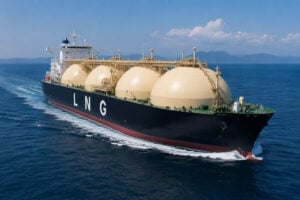 Cheniere Energy, the country’s largest LNG exporter and a big customer for gas from right here in the Marcellus/Utica, just put up another blockbuster quarter. Cheniere shipped a record 188 cargoes of liquefied natural gas (LNG) from its two Gulf Coast plants in 3Q26, raised its full-year profit forecast for the third time this year, and bumped its dividend by more than 12%. More important for our neck of the woods: Cheniere is getting close to a final investment decision (FID) on a big expansion at Sabine Pass, Louisiana — the plant where our molecules end up. And in a twist nobody saw coming a few years ago, QatarEnergy is now a Cheniere customer.
 Four days before Ohioans pick their next governor, Rolling Stone and the climate activist website DeSmog published a story by anti-fossil writer Justin Nobel under the headline “Ohio Denies Evidence of Fracking Waste in Drinking Water. Its Own Records Show Otherwise.” We read every word. The state’s records show no such thing. What they show is one salty water well in Coshocton County that the Ohio Department of Natural Resources (ODNR) investigated in 2021 and traced to a naturally salty layer of rock. Much of the rest is opinion from activists and a water well driller, plus a candidate’s campaign promise. Here’s what the story gets wrong, and what it leaves out.
 It’s a rerun of last spring, only bigger. A dry autumn has left many small streams in Pennsylvania’s Northern Tier running low, and the Susquehanna River Basin Commission (SRBC) has told shale drillers and their water suppliers to stop withdrawing water at 48 locations. Another 12 shale water sources are on the SRBC’s “watch” list, meaning they’re close to being shut off too. In April we reported 15 shutoffs and 9 watch sites (see