
SC PSC Won’t Reconsider Its Approval of Edisto River Gas-Fired Plant
 In June, members of the South Carolina Public Service Commission (PSC) approved a revised project proposal to build a 1,020-megawatt (MW) gas-fired power plant in the state’s Lowcountry, in Colleton County (see SC PSC Approves Revised Gas-Fired Plant Proposed for Edisto River). The project, originally estimated to cost $2.5 billion, is a 50/50 partnership between Dominion Energy (formerly South Carolina Electric & Gas) and Santee Cooper (South Carolina’s state-owned electric and water utility). The plant location is at the retired coal-fired plant, Canadys Station. However, both the scope and the cost doubled last fall (see Dominion’s SC Canadys Gas-Fired Power Plant Doubles in Price). The PSC approved the doubled size/cost of the project in June. Their approval set off a firestorm of legal actions. Read More “SC PSC Won’t Reconsider Its Approval of Edisto River Gas-Fired Plant”
 In June, Pennsylvania Gov. Josh Shapiro took credit for brokering a really huge deal for Amazon to invest $20 billion in three data center locations across the state (see
  Poor lefty U.S. Senator Sheldon Whitehouse (Democrat from Rhode Island). He’s in a bind. Sen. Whitehouse sits on the committee currently negotiating how to loosen up on permitting rules for all sorts of projects, including natural gas pipelines. Whitehouse has traditionally been opposed to natgas pipelines getting built to furnish New England with more gas, but the governor of his own state, along with Dem governors from other New England states, want those pipes (for fear of being tossed out of office if they don’t bring down the price of gas and electricity). But on Whitehouse’s wacko left sit Massachusetts Senators Elizabeth “Pocahontas” Warren and Ed “wacky” Markey, who are 100% opposed to changing the rules for pipelines. Also opposing a change are foreign-backed environmental groups (big contributors to Whitehouse). What’s poor Sheldon going to do?
  OTHER U.S. REGIONS: New York finally found a corporation that wants to pay taxes, so it banned it; New York City cuts power during July 4th heat wave; Maryland regulators not enforcing gas pipeline rules from 2025, consumer advocate says; NATIONAL: U.S. natural gas futures fall as storage surplus remains robust; White House weighs extending Jones Act waivers; INTERNATIONAL: Oil ends lower but holds weekly gains; Rystad outlines 4 potential USA-Iran scenarios; Canada rejects Trudeau’s energy errors.
 Infinity Natural Resources announced the appointment of Timothy Dugan to its Board of Directors, effective July 13, 2026. Dugan brings more than four decades of experience in the Appalachian energy industry, spanning upstream operations, midstream infrastructure, capital allocation, and strategic transactions. He most recently served as President and CEO of Olympus Energy, leading its sale to EQT Corporation for $1.8 billion in July 2025 (see
  Here’s a new gas-fired power plant project not previously on our radar. Beaufort Rosemary, a Virginia-based company, wants to build a 500-megawatt (MW) dual-fuel natural gas and propane power plant on 50 to 80 acres of land in Bethune, South Carolina, in Kershaw County. Officials say the project would bring more than $900 million in economic impact, hundreds of construction jobs, and 15 to 20 permanent jobs once fully operational. After hours of public debate, Kershaw County Council voted 4-3 Tuesday night to approve a 40-year tax incentive deal.
  In June, Ohio Governor Mike DeWine signed Senate Bill (SB) 219 into law. The new law, the first significant update to Ohio’s oil and gas laws since the Kasich administration more than a decade ago, reforms Ohio’s orphaned oil and gas well program and other elements of Ohio’s O&G laws. One aspect of the new law establishes an expedited drilling and plugging permit process. The law prevents the state from rejecting expedited permit requests (capped at 10 per owner annually), shortens timelines for leasing and drilling on public lands—including 30-day permit approvals—and limits landowners’ ability to challenge expired lease renewals. Anti-fossil fuelers are fuming. What’s new?
  The Abu Dhabi (United Arab Emirates) investment group 2PointZero, via its subsidiary ePointZero, closed on its deal to acquire U.S. natural gas infrastructure firm Traverse Midstream Partners for $2.25 billion. This acquisition includes stakes in the Rover Pipeline and Ohio River System, which connect the productive Utica/Marcellus shale region to major demand centers and export hubs. The all-cash transaction gives the Abu Dhabi-based energy infrastructure platform a 35% non-operated stake in the Rover Pipeline and a 25% interest in the Ohio River System (ORS), both of which are operated by Energy Transfer.
  There’s been a change in the Marcellus/Utica. Despite fewer visible rigs and water trucks across Pennsylvania, the Marcellus Shale isn’t declining—it’s maturing. Counting wells or permits no longer measures success, because fifteen years of learning have made modern wells dramatically more productive. Longer laterals, better geologic mapping, and refined completion techniques enable operators to produce more gas from fewer wells, reducing land disturbance, road construction, and traffic while improving economics. This shift from expansion to optimization arrives as demand surges from manufacturing, LNG exports, and AI data centers. For Appalachian communities, the takeaway is clear: the Marcellus isn’t slowing down—it’s getting better.
 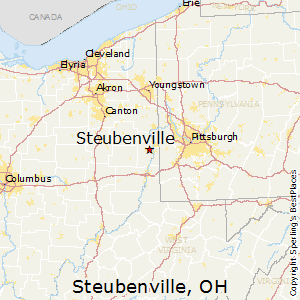 After months of deliberation, Steubenville (Jefferson County), Ohio, City Council voted to accept a bid and proceed with leasing the city’s mineral rights to the oil and gas industry, including areas near residential neighborhoods and Beatty Park. Some residents voiced strong opposition, citing threats to the park’s ecosystem, health concerns, and insufficient public involvement, urging the council to reject bids or form a resident-inclusive committee. Fourth Ward Councilman Royal Mayo voted against it, questioning fracking’s health effects. First Ward Councilman David Albaugh supported it, noting that surrounding areas are already fracked and that no well pad would be built in Steubenville. The money (over $1 million!) is expected within 90 days.
  What a disappointment. We don’t know why, but at yesterday’s U.S. House Committee on Transportation and Infrastructure meeting on the Water Resources Development Act (WRDA), an amendment to overturn the Delaware River Basin Commission’s (DRBC) authority to ban fracking was NOT introduced. The WRDA passed and now goes to the House for a vote — without the amendment that would have overturned the DRBC frack ban, which illegally strips landowners’ property rights in Wayne and Pike counties (in Pennsylvania). The only conclusion we can draw is that the Republican leadership, for whatever reason, didn’t want it attached to the bill. Meaning they caved. Again, what a disappointment.
 Northeast natural gas demand could rise by up to 10 Bcf/d by the early 2030s, supported by power generation, LNG, industrial growth, and advancing pipeline projects. Tudor, Pickering, Holt & Co. (TPH) says regional operators increasingly expect 5–8 Bcf/d of growth by 2030, although the firm models only 3 Bcf/d. The interesting aspect of TPH’s prediction is *where* the increase in gas supply will come from, and which drillers will most likely provide it.
  Last year, we reported on a Pennsylvania Supreme Court decision issued in the case of Commonwealth of Pennsylvania, Pennsylvania Game Commission v. Thomas E. Proctor Heirs Trust (see