
VA County Planners Approve Atlantic Coast Pipeline Compressor Stn
 Something noteworthy has happened in Buckingham County, VA. Planning Commission members in the county worked hard to evaluate a request by Dominion for their Atlantic Coast Pipeline project, a request to build a compressor station in Buckingham County. Residents expressed concerns–over noise, air pollution, explosions–you name it. Planning Commission members listened, and in the end, voted to recommend that Dominion be allowed to build the compressor station, as long as they adhere to 40 conditions set forth in the Commission’s recommendation. You see, this is how adults do things. They are reasonable (able to be reasoned with). They listened, closely. They heard the concerns. They devised a plan that will allow Dominion to build the compressor station, but at the same time protect the residents that live near it. Of course that wasn’t good enough for the children-in-adult-bodies who chanted a threat to shut down the pipeline…
Read More “VA County Planners Approve Atlantic Coast Pipeline Compressor Stn”
 On April 29, Spectra Energy’s Texas Eastern Transmission (TETCO) “Delmont Line 27” pipeline exploded in Westmoreland County, PA, seriously injuring one resident who was burned over much of his body (see
  Each month the U.S. Dept. of Energy’s Office of Fossil Energy issues a report on LNG exports and imports. We check in on the report from time to time. This month’s report (with data through September) is particularly interesting. It shows the rapid scale-up of Cheniere’s Sabine Pass export facility on the coast of Louisiana. Sabine Pass is exporting U.S. shale gas, including some Marcellus/Utica gas, which is why we are interested in the LNG story. November is predicted to set a new record on the export of U.S. shale gas from Sabine. The LNG import picture, increasingly small, is also interesting and instructive. All of the LNG coming into the U.S. (via ship, not via pipeline from Canada) this year has come from one country: Trinidad. And there is a single import terminal that receives almost all incoming, non-pipeline LNG: Everett, MA (near Boston). Which is why GDF Suez, the operator, has been agitating against new pipelines to New England (shame on them)…
 The radicals at the Sierra Club are at it again. Causing private companies to expend big money to defend their Constitutional, capitalistic rights. The NEXUS Pipeline is a $2 billion, 255-mile interstate pipeline that will run from Ohio through Michigan and eventually to the Dawn Hub in Ontario, Canada. It is a critically needed pipeline to move Utica and Marcellus Shale gas from an over-saturated market in the northeast to markets in the Midwest and Canada. The Sierra Club has just sued DTE Energy, one of the sponsors of the project, falsely claiming DTE’s electric customers will end up paying more for electricity because of the pipeline…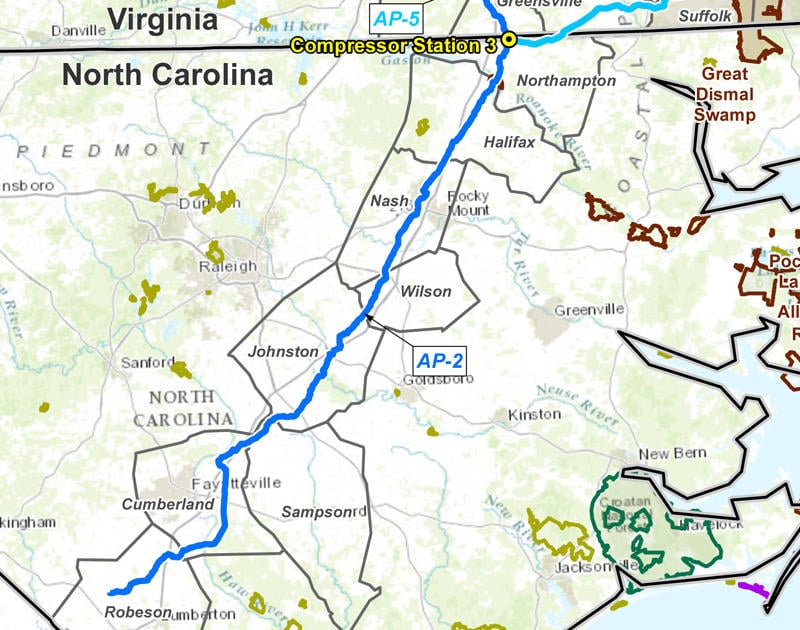
 It’s about time! A U.S. District Court Judge in Texas recently granted Exxon the right to examine “internal phone records, other communications and depositions” of far-left Massachusetts Attorney General Maura Healey, related to her involvement in attempting to persecute Exxon Mobil for daring to say man-made global warming may not be all it’s cracked up to be (see
  Paul Driessen is senior policy adviser for the Committee For A Constructive Tomorrow (CFACT), which is sponsoring the All Pain No Gain petition against global-warming hype. He also is a senior policy adviser to the Congress of Racial Equality and author of “Eco-Imperialism: Green Power – Black Death.” Driessen writes and publishes in a number of venues, including Townhall. A recent article penned by Driessen (below) absolutely nails the anti-pipeline movement in our country. We’ve long known that antis moved from fracking to piplelines, figuring they could stop the use of fossil fuels if they can strangle the pipeline network necessary to move oil and gas to market. But as Driessen explains, the real root of this movement, the thing that motivates them more than anything, is not saving Mom Earth. It is the total annihilation of capitalism (and our country). That’s what drives these anti-pipeline fanatics…
 Another week, another so-called research paper that purports to show a link between fracking and earthquakes. Two researchers at the University of Calgary looked at drilling and fracking of shale wells in Canada’s Duvernay Shale (western part of the country), looking for clues that might indicate fracking itself–if done near an underground fault–can lead to low-level earthquakes. The researchers claim they have found such a link–which is the first such study to make a connection between fracking and earthquakes. The researchers have just published “Fault activation by hydraulic fracturing in western Canada” (full copy below), in the journal Science. We have repeatedly reported, based on studies and observable facts, that disposing of high volumes of wastewater in injection wells near underground faults (large cracks in the rock layer) can lead to earthquakes. We’ve also chronicled that fracking directly over a fault can also lead to an earthquake–which has been documented to happen perhaps half a dozen times, ever, out of the hundreds of thousands of times wells have been drilled and fracked. Statistically zero. But this study claims there is a link and the inference is that fracking leads to more earthquakes that you may think. Should we be worried?…
 Turns out anti-fossil fuel protesters, behaving like the petulant children they are, couldn’t stop the adults in the room last night in Philadelphia. You may recall we told you yesterday that wackos from a fringe-left group called 350 Philadelphia threatened to “swarm” a meeting of SEPTA (Southeastern Pennsylvania Transportation Authority) where a vote was scheduled on a plan to build a Marcellus gas-powered electric plant that would provide electricity to SEPTA’s northern Regional Rail lines (see
  Earlier this week we ran the news that Canadian pipeline giant TransCanada’s plan to radically lower the cost to pipe natural gas from the western regions of Canada to the eastern part of the country, in an effort to undercut Marcellus/Utica gas from flooding into the region, failed (see
 Earlier this week MDN brought you the news that the New Jersey Division of the Rate Counsel (NJDRC)–a state government agency responsible for representing the interests of residents, businesses and other rate payers in dealing with regulated public utilities and insurance firms–responded to PennEast Pipeline’s release of a study obliterating the NJDRC’s claims that the pipeline isn’t needed (see
  It seems old Mom Earth has a major case of flatulence (i.e. farting). Researchers who have been mapping the ocean floor have discovered “an active strip of seafloor called the Cascadia Subduction Zone is bubbling methane like mad” off the coast of Washington, Oregon and California. [Quick, somebody call Cornell prof Bob Howarth! There’s fugitive methane escaping!!] Big Green advocates get their knickers in a twist over fugitive methane because, ‘ya know, it causes global warming. But this time mankind is nowhere to be found as the cause. This massive methane leak off the West Coast is Mom Earth, all by herself, farting away and killing herself without even knowing it. How tragic. And how funny!…
 In true environmental Nazi fashion, a group of profoundly stupid people have pledged to “swarm” and shut down a SEPTA (Southeastern Pennsylvania Transportation Authority) meeting where a vote will be taken to build a Marcellus gas-powered electric plant that would provide electricity to SEPTA’s northern Regional Rail lines–a win/win for all Pennsylvanians. The reason the enviro Nazis want to shut down the meeting is to stop the vote because the clean-burning plant would burn a “fossil fuel” and these poor, lost souls grew up watching Captain Planet cartoons and believe burning natgas will toast Mom Earth. That is, they were brainwashed children who grew up to be maladjusted adults…
 As MDN reported in September, the Maryland Dept. of the Environment (MDE) beat the Oct. 1 deadline to release onerous new fracking regulations (see