
PA DEP Invites Public Comment on Shell 60-Mile Ethane Pipeline
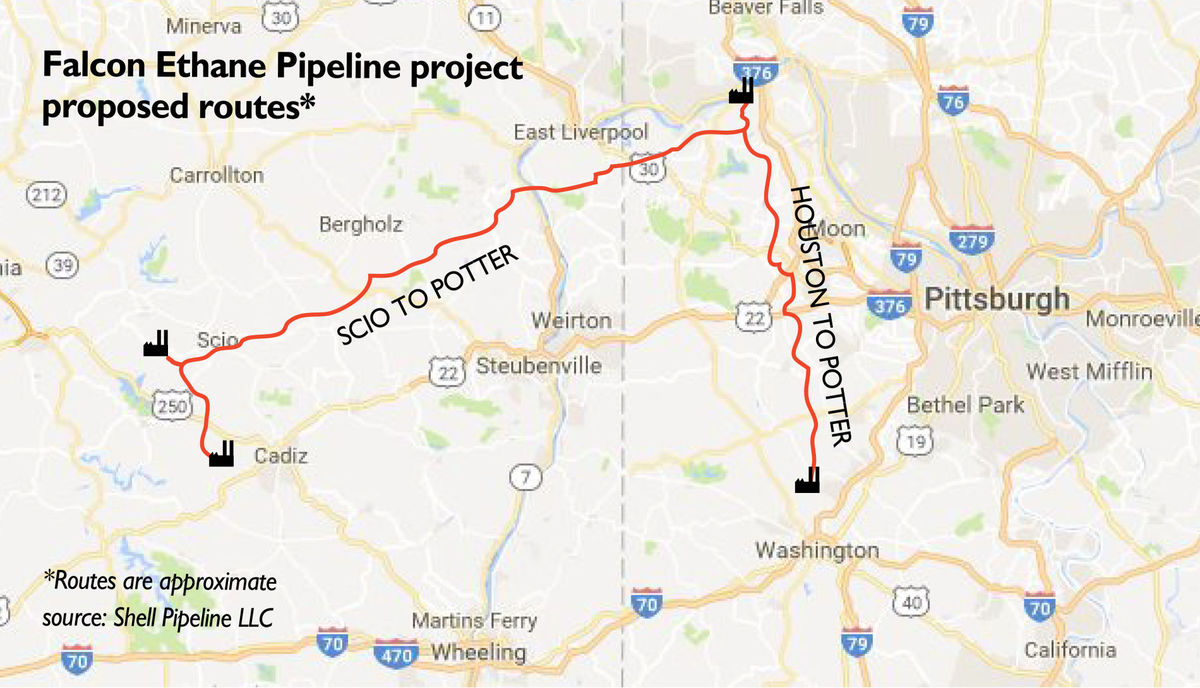
The Pennsylvania Dept. of Environmental Protection (DEP) is taking a close look at Shell’s proposal to build an ethane pipeline to feed the $6 billion cracker plant now under construction in Beaver County, PA. In fact, the DEP wants public input on the ethane pipeline–by Feb. 20th. Brief history: In February 2016, MDN brought you exclusive news that Shell had begun approaching landowners in Beaver County to get them to sign easements for two ethane pipelines to feed the mighty cracker plant they plan to build in the county (see Exclusive: Shell Leasing Land for 2 Pipelines to PA Cracker Plant). At that time Shell had still not fully committed to building the cracker–something they finally did in June 2016 (see Breaking: Shell Pulls the Trigger, PA Ethane Cracker is a Go!). NGI’s Shale Daily broke a story in August 2016 that shed new light on the project–news that Shell is working on an ethane “pipeline system” with two “legs” to feed the cracker, confirming the tip we received in February (see Shell Working on 94-Mile Ethane Pipeline to Feed PA Cracker). Last October Shell filed an application with the PA DEP for the PA portions of the pipeline (see Shell Files PA Application for Ethane Pipe to Feed Cracker Plant). The DEP is now considering those portions–some 60 miles running through the state. Here’s how you can comment on/support the project…
Read More “PA DEP Invites Public Comment on Shell 60-Mile Ethane Pipeline”
 Last week MDN brought you news that Dominion’s Cove Point LNG export facility along the shore of Maryland has delayed its official start-up until perhaps as late as April (see
 Millennium Pipeline is building a tiny, 7.8 mile pipeline in Orange County, NY that will connect the main Millennium pipeline to the CPV Valley Energy Center gas-fired electric plant. Both projects are currently under construction. Millennium’s project, called the Valley Lateral Project, was opposed by the corrupt Andrew Cuomo Dept. of Environmental Conservation (DEC). The DEC refused to grant necessary permits for the federal project, so the Federal Energy Regulatory Commission (FERC) voted to overrule DEC and allow it to be built anyway (see
 The Ohio Environmental Protection Agency (OEPA) continues to hound the Federal Energy Regulatory Commission (FERC) about a potential spill of drilling mud by Rover Pipeline near the Tuscarawas River. Last week we told you that OEPA, which has ZERO regulatory oversight of the Rover Pipeline project, had been told (by informants) that when Rover restarted underground horizontal directional drilling (HDD) work at the Tuscarawas site, some 146,000 gallons of drilling mud went down the hole but never came back out (see
 For years now the radical Park Park Foundation has been buying its research from a few select professors at a few select universities. One of the scientists for sale is Avner Vengosh, professor of geochemistry and water quality at Duke University’s Nicholas School of the Environment (see
 Earlier this week TransCanada (i.e. Columbia Pipeline) broke ground for a new $100 million compressor station that will flow gas through the Mountaineer XPress Pipeline. MDN previously told you that at the end of December the Federal Energy Regulatory Commission (FERC) issued a final approval for Mountaineer (see
 “One word: Plastics” (The Graduate) – Mercer County, which is two counties and 50 miles north of Beaver County (located along the border with Ohio) is making plans now for how their county to grab some of the “low hanging fruit” that will appear when the Shell ethane cracker in Beaver County goes online in the early 2020s. You read that right. NOW is the time for counties in the region to make plans and set those plans in motion to attract some of the numerous businesses that will set up shop to be close to the cracker plant. Mercer County officials recently attended a forum where the topic was ancillary development that will happen because of the cracker plant. What is the low hanging fruit that will magically appear with the cracker? Manufacturing–and the jobs that go with it. In particular, manufacturing and jobs in the plastics industry. A regional trade organization–Penn-Northwest Development Corp.–is planning to hit the plastics industry trade shows this year. Penn-Northwest is working with counties like Mercer to help them market themselves to plastics manufacturers…
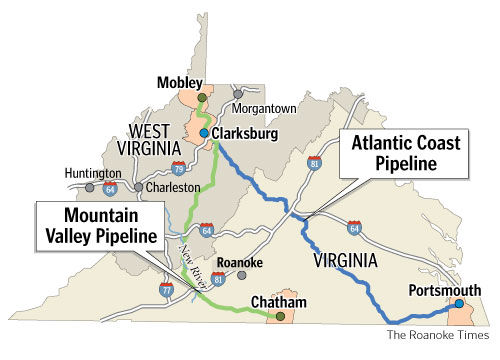
 North Carolina has a Democrat governor. The state Dept. of Environmental Quality (DEQ) is an executive branch agency. So it’s no surprise to learn that the DEQ is antagonistic toward Dominion Energy’s $5 billion, 594-mile Atlantic Coast Pipeline (ACP)–a natural gas pipeline that will stretch from West Virginia through Virginia and into North Carolina. In October the DEQ rejected a plan submitted by Dominion for the pipeline project, claiming the erosion and sediment control part of the plan is not up to snuff (see
 A leftist filmmaker is attempting to get enough money via a Kickstarter campaign to fund a new propaganda film called “The Power of Protest,” which looks at five radical/left “protest” movements, one of which is Lancaster Against Pipelines (LAP). LAP is an anti-fossil fuel group founded to try to stop Williams’ $3 billion Atlantic Sunrise project, a 198-mile natural gas pipeline running through 10 Pennsylvania counties to connect Marcellus Shale natural gas from northeastern PA with the Williams’ Transco pipeline in southern Lancaster County. The married couple who started LAP, Mark and Malinda Clatterbuck, are far-left radicals who pretend to be mom and pop, salt-of-the-earth, neighbor-next-door, aw-shucks common folks who would never engage in “violent” protests. Mark Clatterbuck admits to traveling to North Dakota to participate in the mass action against the Dakota Access Pipeline–a “protest” that turned quite violent and destroyed millions of dollars of property. No, we’re not saying nor implying that Clatterbuck himself engaged in illegal actions while there. We are saying the Clatterbucks’ sympathies lie with protest movements that sometimes result in such actions. There is a very fine line for leftists between violent and non-violent protests–and all too often they tip over into the latter. They simply can’t accept the fact other people disagree with their extreme, outside-the-mainstream positions. In advertising the Kickstarter campaign to try and gin up money to fund the movie, the Clatterbucks and LAP are pushed front and center as examples of “mass protests” and their supposed effectiveness. We recall that Malinda Clatterbuck once claimed LAP has “over 1,000 people” willing to show up and engage in “nonviolent” protests against Atlantic Sunrise. So far, a grand total of 45 of their “committed” 1,000+ members have shown up and gotten themselves arrested (see
 We spotted an article a month ago that is shocking and disturbing. This is the first time we’ve had a chance in our daily article roundup to bring it to you. A Stanford University professor pedals a “religion” that claims the world can be fueled by 100% renewable energy. That is, renewables can provide everything we need: electricity, heating, transportation, industry, shipping, the works. And renewables can do it so well that we won’t need power plants that run on actual fuel. It’s a bizarre viewpoint, but there you go. Some people believe in Santa Claus too. The Stanford prof published a paper espousing this theory. There were a lot of factual flaws in the paper, so another scientist (actually 22 prominent scientists) published a paper pointing out the problems with the Stanford prof’s paper. That’s how it’s done in academe. You put your research out there, and others can (often do) come along and question it with their own research and rebuttal. That’s how science gets better. So what did the Stanford prof do? He sued one of the 22 authors of the dissenting paper, along with the academic journal that published it! Sued them for libel. The person he chose to sue isn’t affiliated with an institution with a legal team to defend him–so this is selective persecution. An attempt at legal bullying. No longer is science something we debate with published findings. Now it’s a matter of faith–and God help you if you believe on the wrong side of an issue like global warming, or renewables. If you dare to believe the “wrong way”–or worse yet poke holes in a true believer’s theories–you may get hauled into court. An ebook titled “ROADMAP TO NOWHERE: The Myth of Powering the Nation With Renewable Energy” (full copy below) covers this controversy and shines a light on what you thought you knew about so-called renewables. The ebook compares renewables with nuclear energy (we wish it were natgas, but perhaps using nuclear is the better comparison in this case). Take a blood pressure pill before you read the following…


 Anyone with even a passing interest in the natural gas market–either the Marcellus/Utica or elsewhere–knows there is one dominant factor that drives exploration and production: PRICE. The price of natural gas is the tail that wags the entire natgas dog. Low price? Less (or no) drilling, shut-in wells, less leasing–everything is less. High price? Pop the cork on the champagne bottle! When the price goes up and stays up, drillers begin seismic surveys, then leasing, then permits, then drilling. After drilling comes pipelines–both to the well and to market. And businesses tend to gather around points where there is access to natgas (and its byproducts). It’s a virtuous cycle, from upstream (drilling) to midstream (pipelines) to downstream (end users of the gas)–that all starts with price. Who should have an interest in price? Everybody! However, there are some whose jobs and livelihoods depend on price–gas traders, industrial buyers, drillers who need to sell their gas, etc. Those people need a daily update on the price. Who do they turn to? There are several price reporting authorities that monitor trade information for natural gas trading. There is no single price for natural gas–there are hundreds of prices. Gas is traded at trading hubs or points along major pipelines across the country. Each time a trade is done (price requested, price offered or “ask” and “bid”), that valuable information gets recorded and sent to a price recording authority. Each day around 1:30 PM Central Time, NGI gathers up trade information for THAT DAY, trades that have occurred so far at trading points all over the US and Canada, and posts/emails the information to subscribers. It is like getting tomorrow’s prices–the prices everyone else will base their trades on–today! How can you get tomorrow’s prices today? Glad you asked.
 Once upon a time, it was pretty easy for commodities traders (and others) to predict oil and gas production. You just watch the Baker Hughes rig count. When the number of rigs actively drilling goes up, production will follow X months later. And when active rigs go down, production goes down too. But that is no longer the case! Why? Shale wells are producing more over a longer period of time. And the technology used when drilling today is radically different than tech from just a few years ago. Drillers now drill wells faster–much faster–meaning they can use fewer rigs. And frackers are using “hellish” amounts of sand to frack wells, producing ever-more quantities of oil and gas. What it all means is this: If you’re a trader, you can no longer depend on rig counts as your main metric to calculate production. You need new metrics, such as…
